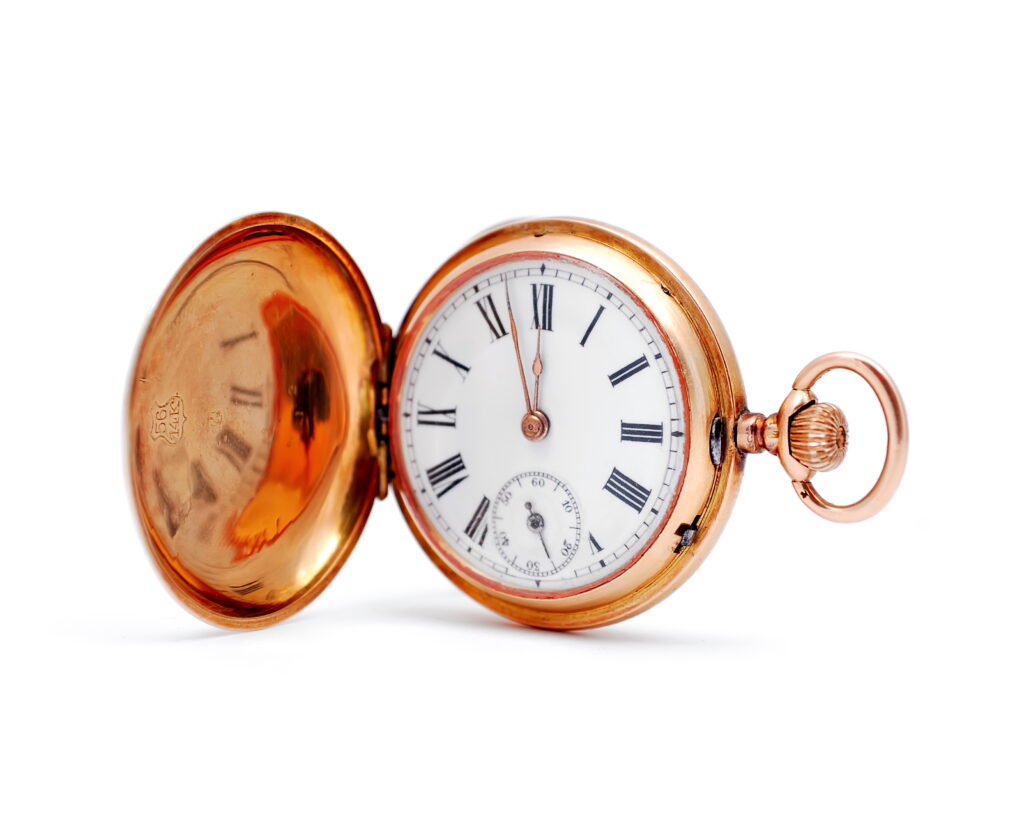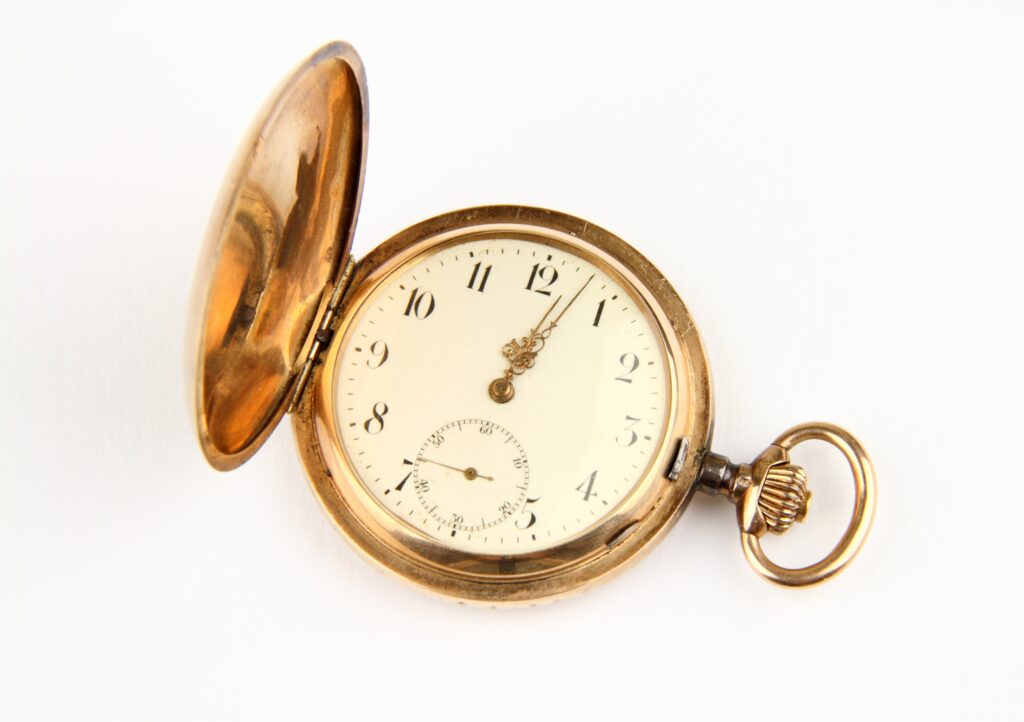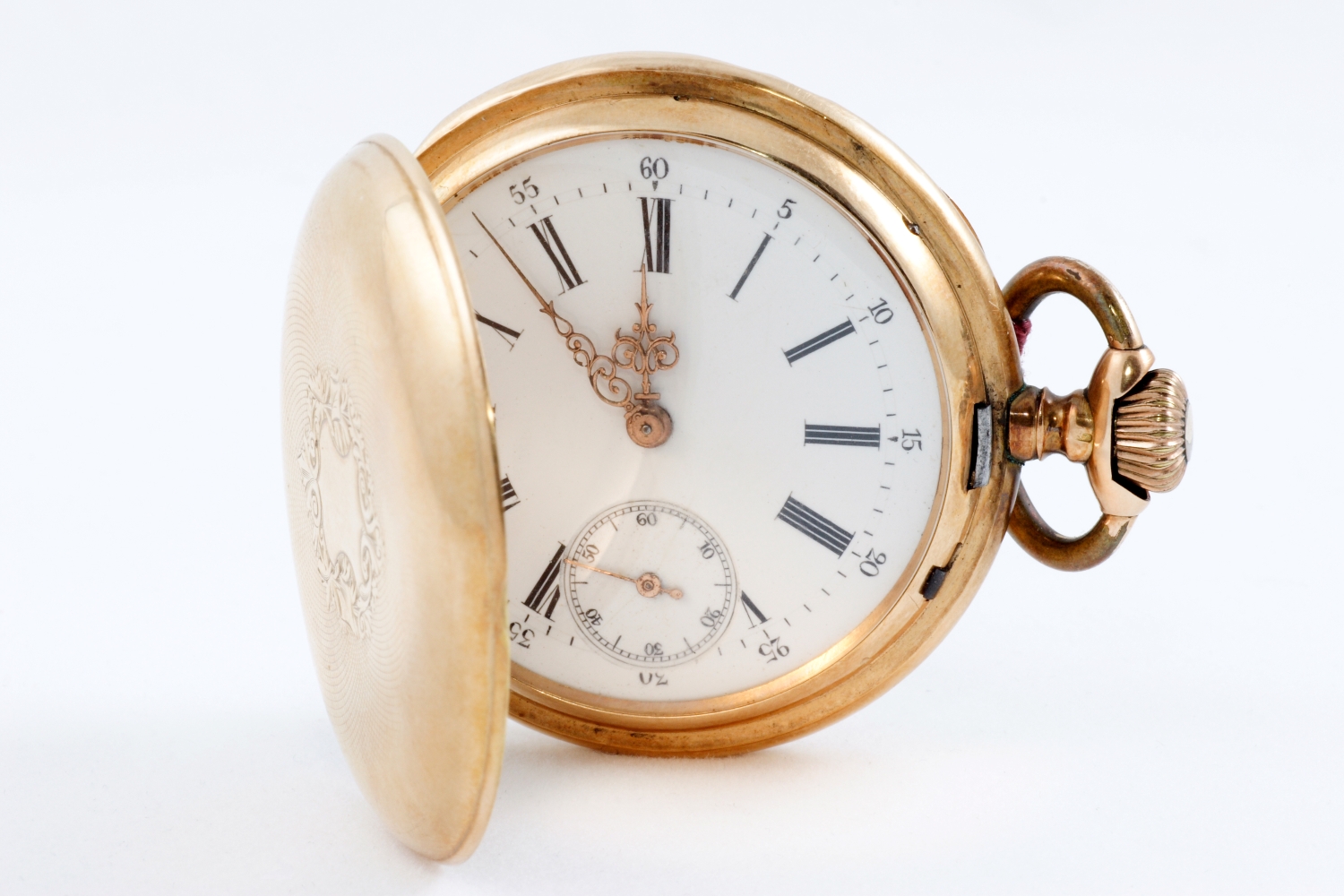
Gold pocket watches have long been admired for their craftsmanship, elegance, and enduring value. Once an everyday necessity for gentlemen across Britain and beyond, they are now treasured as antiques, family heirlooms, and highly sought-after collector’s items. Even watches that have seen decades of use can command impressive prices if they possess desirable characteristics or remain in original condition.
In this guide, we’ll explore everything you need to know about gold pocket watches, including their history, collectability, maintenance, valuation, buying advice, and selling tips. If you own a gold pocket watch, understanding more about it can help you make an informed decision about its future. In turn, you’ll be able to see why they’re still so desirable and special to collectors, and why they may be happy to pay high prices for them.
The History of Gold Pocket Watches
Pocket watches first appeared during the 16th century, but it was throughout the 18th and 19th centuries that they became increasingly sophisticated and widely owned. Advances in mechanical watchmaking allowed manufacturers to produce increasingly accurate and reliable timepieces, while improvements in mining and metalworking made gold cases more accessible to affluent buyers.
Owning a gold pocket watch was often a sign of success. Businessmen, professionals, military officers, and members of the upper classes frequently carried them as symbols of achievement and refinement. Many were engraved with family crests, initials, or important dates, making them deeply personal possessions as well as practical tools.
Pocket watches gradually fell out of everyday use, primarily due to warfare, as soldiers found wristwatches to be more practical and “hands-free” when it mattered most. However, their craftsmanship and historical significance ensured they would continue to be appreciated by future generations.
Why Did Makers Choose Gold as Their Watch Material?
Gold offered several advantages over other materials. It was corrosion-resistant, beautifully finished, and capable of being worked into highly decorative cases featuring intricate engraving, engine turning, or enamel decoration. Unlike base metals, gold also retains its appearance over time, making it an ideal material for luxury watchmaking.
Are Gold Pocket Watches Still Collectable Today?
Yes, they certainly are. Gold pocket watches remain highly collectable, with demand coming from antique enthusiasts, watch collectors and investors alike. Their appeal lies in the combination of traditional craftsmanship, mechanical precision, and historical significance, with many examples representing a level of watchmaking rarely seen today.
Collectors often look for well-preserved watches from respected makers, particularly those with original movements, clear hallmarks and documented provenance. Family heirlooms can also carry significant sentimental value alongside their financial worth.
What Makes a Gold Pocket Watch Valuable?
The value of a gold pocket watch usually depends on much more than the gold it contains. While the purity and weight of the gold case are important, specialists also consider factors such as the manufacturer, age, rarity, condition, and originality of the watch.
A high-quality mechanical movement, original dial, matching case and movement numbers, and any accompanying paperwork or provenance can all increase desirability. Market demand also plays a significant role, particularly for watches produced by renowned makers or from particularly collectable periods.
Understanding how these factors work together is key to obtaining an accurate valuation.
How Can I Tell if My Pocket Watch Is Solid Gold or Gold Plated?
The easiest way to begin identifying a gold pocket watch is by checking for hallmarks or purity stamps inside the case. Marks such as 9ct, 18ct or 22ct generally indicate solid gold, while terms like “gold plated” or “rolled gold” suggest a plated case.
Weight, wear patterns, and the overall construction of the watch can also provide useful clues, although these aren’t always definitive. Because some watches use gold-filled cases or replacement components, identification isn’t always straightforward.
If you’re unsure, a professional assessment is the most reliable way to determine whether your pocket watch is solid gold and to understand its true market value.
Understanding Antique and Vintage Gold Pocket Watches
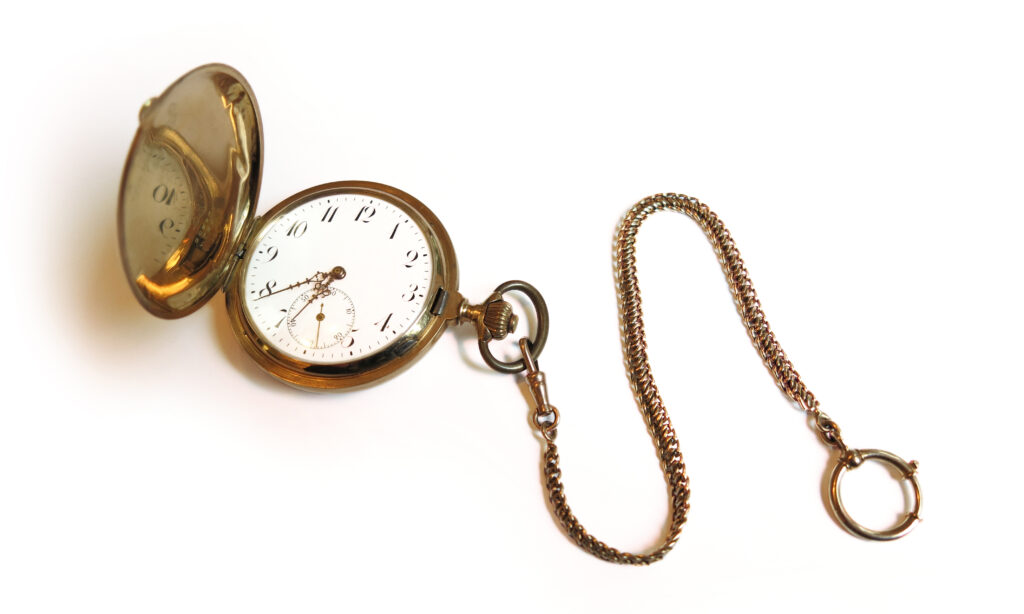
Gold pocket watches are often described as antique, vintage, or simply old, but these terms have distinct meanings. Although the terms are sometimes used interchangeably, they each describe watches from different periods. An antique pocket watch is generally considered to be at least 100 years old. Many examples date from the Georgian, Victorian and Edwardian eras, making them particularly attractive to collectors who appreciate historic craftsmanship and originality.
Meanwhile, a vintage pocket watch is usually younger than an antique but still possesses historical significance. While there is no universally accepted definition, watches manufactured between the 1920s and the 1970s are commonly regarded as vintage. These often include beautifully engineered Swiss and British timepieces produced during the golden age of mechanical watchmaking.
Learning to recognise these differences – with a helpful guide from experts – will help you better understand your watch and appreciate its place in horological history.
Which Eras of Gold Pocket Watches Are Most Collectable?
Collectors are often drawn to gold pocket watches from periods renowned for exceptional craftsmanship and innovation. Victorian and Edwardian watches remain particularly popular, while finely made Georgian examples can be especially rare. Early twentieth-century Swiss watches from prestigious manufacturers also continue to command strong interest.
Ultimately, collectability depends on more than just age. Original condition, rarity, the maker and historical significance all contribute to a watch’s desirability in today’s market.
Gold Pocket Watch Maintenance and Restoration
Gold pocket watches were built to last, and many continue to keep excellent time more than a century after they were made. However, like any precision mechanical instrument, they require careful handling and occasional maintenance to preserve both their appearance and functionality.
While regular servicing by a specialist can help protect a watch for future generations, owners should approach restoration with caution. In some cases, preserving originality is more important than making a watch look brand new.
Does Restoring a Gold Pocket Watch Reduce Its Value?
Restoration can sometimes improve a pocket watch’s appearance or mechanical performance, but excessive restoration may reduce its appeal to collectors. Replacing original dials, hands or other components, or over-polishing a gold case, can remove features that contribute to the watch’s authenticity and value.
Routine servicing to keep the movement in good working order is generally encouraged, but cosmetic restoration should always be carefully considered. Seeking advice from a specialist before carrying out any work can help preserve both the watch’s historical integrity and its market value.
Collecting Gold Pocket Watches
Gold pocket watch collecting has enjoyed a resurgence in popularity among collectors in recent years. As appreciation for traditional craftsmanship continues to grow, many buyers are turning towards mechanical timepieces that combine historical significance with lasting investment potential.
Why Are Gold Pocket Watches Becoming Popular with Collectors Again?
Several factors have contributed to renewed interest in gold pocket watches. Collectors increasingly value traditional craftsmanship, mechanical engineering and the individuality that antique watches offer. Many appreciate their investment potential, particularly as high-quality examples become harder to find.
Unlike modern watches, antique gold pocket watches are also often one-of-a-kind. Their unique movements, handcrafted cases and fascinating histories make them rewarding pieces to own, whether they’re displayed as part of a collection or carefully preserved as family heirlooms.
Growing interest in vintage luxury items has also introduced a new generation of collectors to pocket watches, helping sustain demand for well-preserved examples from respected makers.
Valuing Gold Pocket Watches
Whether you’re looking to sell, insure, or simply learn more about your watch, obtaining an accurate valuation is essential. While the value of the gold itself forms part of the calculation, specialist buyers look far beyond precious metal content when assessing a pocket watch.
Every watch is unique, and even seemingly similar examples can vary considerably in value depending on their age, rarity, condition and desirability among collectors.
How Do Experts Value Gold Pocket Watches?
Professional valuers examine a range of factors before determining a watch’s worth. Alongside the gold content, they assess the manufacturer, movement quality, hallmarks, age, originality, condition and overall rarity. Provenance, accompanying documentation and current collector demand may also influence the final valuation.
Because specialist buyers understand both the precious metal and the collector’s market, they are often able to recognise value that might otherwise be overlooked.
Buying Gold Pocket Watches
Purchasing a gold pocket watch can be an exciting investment, whether you’re starting a collection or searching for a meaningful heirloom. However, understanding what to look for can help you avoid costly mistakes and ensure you buy a watch that offers lasting value.
Authenticity, originality and condition should always take precedence over appearance alone. Taking time to research the maker, inspect the movement and verify the hallmarks can make a significant difference to both enjoyment and future resale potential.
What Should I Look for When Buying a Gold Pocket Watch?
When buying a gold pocket watch, it’s worth checking that the hallmarks are genuine, the movement appears original, and the watch has not been excessively restored. Collectors generally prefer original dials, matching serial numbers, and a good overall condition.
Buying from a reputable specialist can also provide greater confidence, as experienced dealers will verify authenticity and accurately assess the watch’s quality and market value.
Selling Gold Pocket Watches
For many owners, there comes a time when selling a gold pocket watch is the right decision. Whether you’ve inherited a watch that doesn’t suit your tastes, are downsizing a collection or simply wish to unlock its value, understanding the selling process can help you achieve the best possible outcome.
The amount a watch is worth depends on numerous factors, and choosing the right buyer can make a significant difference to the price you receive.
How Much Is My Gold Pocket Watch Worth?
There is no single value that applies to every gold pocket watch, as two seemingly similar watches may vary considerably in price depending on many factors. Current collector demand can also have a significant influence on a watch’s market value.
A professional valuation is the best way to understand what your watch is worth, particularly if it may have historical or collector appeal beyond the value of its precious metal.
Do Specialist Buyers Pay More for Gold Pocket Watches Than Jewellers?
In many cases, specialist buyers can offer more than general jewellers because they recognise the value of the watch as a complete collectable rather than simply assessing its gold content.
Factors such as the manufacturer, movement, rarity, originality, and historical significance can all add considerably to a watch’s worth. Buyers with expertise in antique timepieces and access to established collector networks are often best placed to recognise these qualities and offer a price that reflects the watch’s true market value.
Selling Your Gold Pocket Watch with Burlingtons Ltd.
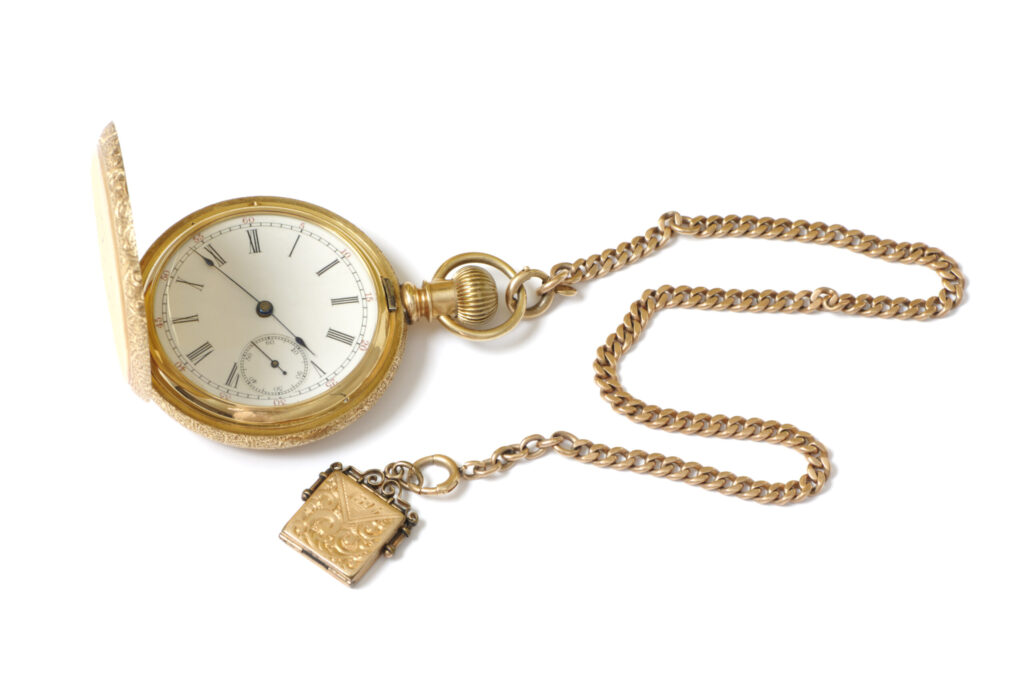
If you’re considering selling a gold pocket watch, choosing the right buyer is just as important as understanding its value. At Burlingtons Ltd., we specialise in purchasing antique and vintage gold pocket watches, offering a discreet, straightforward alternative to auction houses and high street jewellers.
For added convenience, we offer complimentary, no-obligation home valuations throughout the UK, allowing your watch to remain safely in your possession while it is assessed. Should you decide to sell, you’ll benefit from immediate payment, no hidden fees and a confidential, personal service from start to finish.
Book Your Free, Fair, Personalised Valuation
With more than 30 years of experience, our experts personally assess every watch, considering not only its gold content but also its craftsmanship, provenance, rarity and appeal to collectors. This specialist knowledge allows us to offer fair, competitive valuations that reflect the true value of your timepiece.
If you’d like to discover what your gold pocket watch could be worth, contact us today to arrange your free, no-obligation valuation and speak directly with a trusted specialist in gold pocket watches.