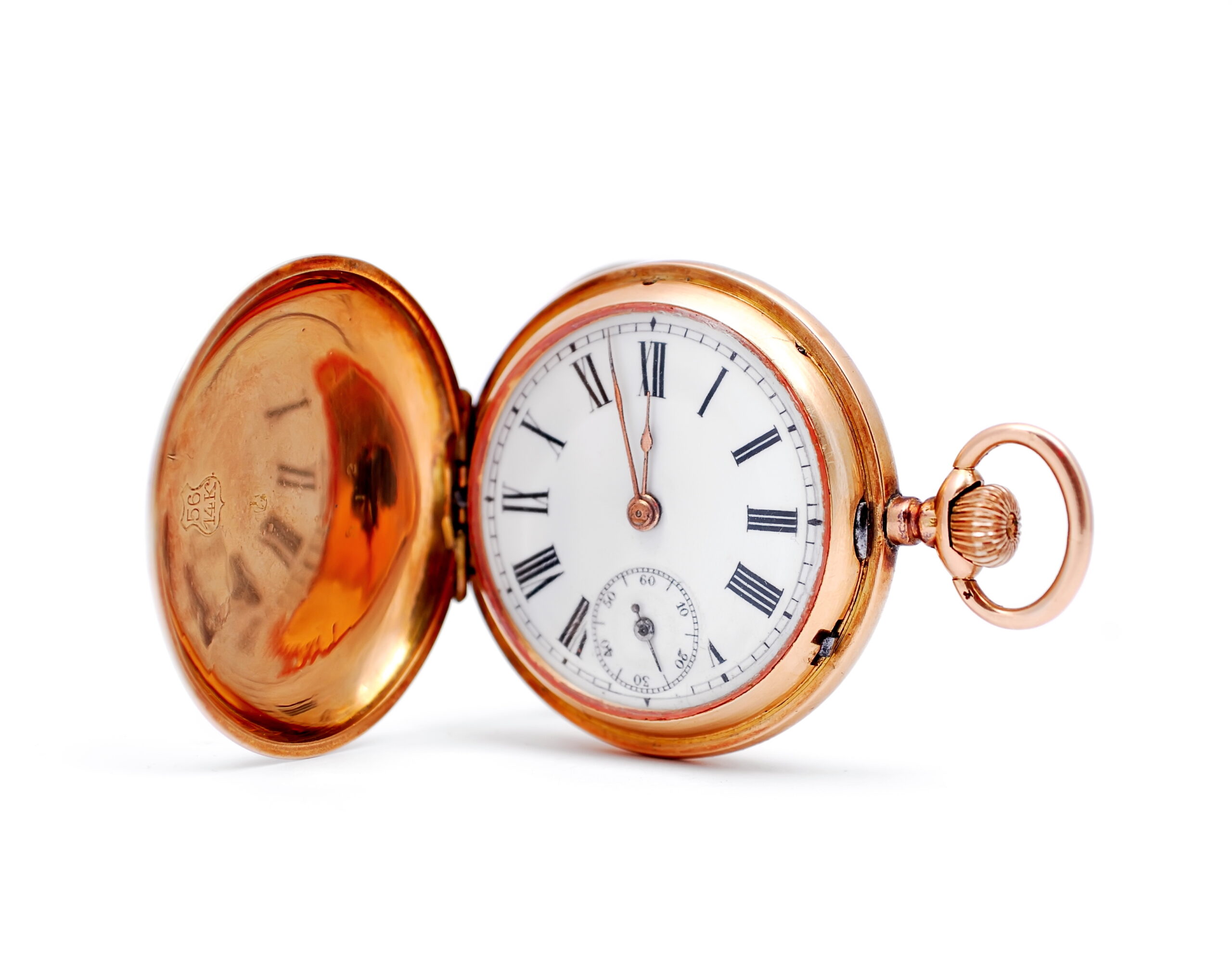
Gold pocket watches occupy a distinctive place within the world of antique timepieces. Because of this, they can appeal equally to established collectors, first-time buyers, and those looking for tangible items with potential investment value.
However, buying a gold pocket watch does need some careful consideration. Two watches that seem similar at first glance can differ substantially in quality, authenticity, and value. Many different factors can all influence whether a watch represents a worthwhile purchase.
Whether you are looking for a pocket watch to wear, add to a collection, or hold as a long-term investment before selling, understanding what separates an important example from an ordinary one can help you buy with greater confidence.
What Should You Look for When Buying a Gold Pocket Watch?
Before buying a gold pocket watch, it’s important to look beyond its outward appearance. An attractive gold case may immediately catch your attention, but the most desirable watches usually combine several valuable characteristics.
The Watchmaker
The maker is an important starting point. Watches produced by respected manufacturers and highly regarded individual watchmakers tend to attract stronger collector interest, particularly when they feature high-quality movements or were produced in relatively limited numbers. However, a prestigious name should never be considered in isolation. The specific model, age, condition, and originality must also be assessed.
Case Quality and Metal Content
The gold case should be examined to establish whether it is solid gold, gold-filled, or gold-plated. Clear hallmarks can reveal the purity of the gold and may also indicate where and when the case was assayed. The case should ideally be original to the movement, as a genuine movement that has later been placed into a different case may be less desirable to serious collectors.
The Watch’s Condition
Condition is another major consideration. Look carefully at the dial, hands, case, winding mechanism, and movement. Hairline cracks in an enamel dial, deep dents in the case, or evidence of water damage may affect value. Some signs of age are expected, but significant damage or inappropriate restoration can make a watch less appealing.
Alongside this, buyers should also consider:
- The quality and complexity of the movement
- Whether the watch is currently working
- Its rarity and production numbers
- The originality of its components
- Any service or restoration history
- Available boxes, papers, or supporting documentation
- Its provenance and previous ownership
- Current demand among collectors
Are Antique Gold Pocket Watches a Good Investment?
Certain antique gold pocket watches can retain their value well and may appreciate over time, but no antique should be treated as a guaranteed investment. Examples most likely to appeal to future buyers are generally those featuring characteristics we’ve already mentioned, namely:
- They’re made by respected manufacturers
- They’ve been preserved in strong original condition
- They feature desirable qualities (e.g., unusual movements, rare complications, or exceptional decorative work)
- They’re already desirable to collectors and were produced in limited quantities
- They have an historically important provenance
Gold pocket watches benefit from having an underlying precious-metal value. Even if collector demand changes, a solid-gold case still contains an intrinsically valuable material.
Market preferences can change, so prospective buyers should carry out thorough research and obtain specialist advice before making a substantial purchase. It is also sensible to buy a watch that you genuinely appreciate. That way, it can still provide enjoyment as a historic and beautifully made object regardless of how its monetary value changes.
How Maintenance and Restoration Play a Role in Value
Condition and originality are particularly important when buying gold pocket watches for potential investment. Excessive polishing, replacement dials, mismatched cases and movements, or extensive modern restoration can all reduce collector interest. Conversely, a well-preserved watch with its original components and documented history may become increasingly difficult to find.
It is important to ensure your pocket watch is serviced by a professional, and that any restoration work that is carried out is at least sympathetic to the original design. This gives any piece sold a better chance of achieving a higher price.a higher price under the right circumstances – especially when they help establish an interesting history. This is why selling a gold pocket watch purely for scrap can result in its wider value being overlooked. The safest approach is to have the watch assessed as a complete object before making a decision.
How Can You Avoid Buying a Fake Gold Pocket Watch?
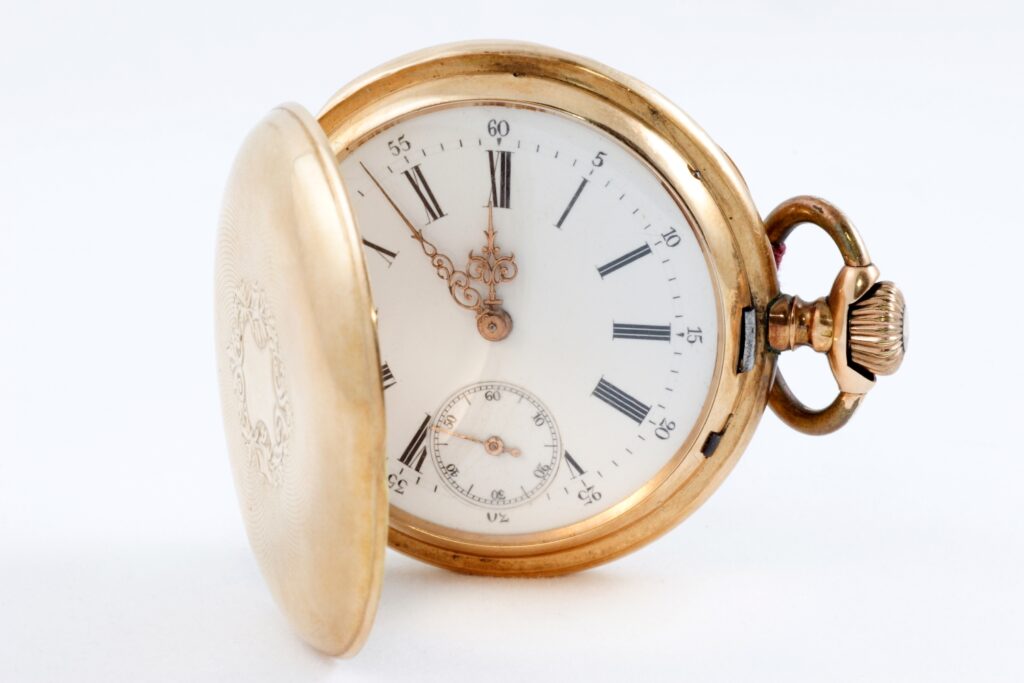
Counterfeit and incorrectly described pocket watches can range from complete modern reproductions to genuine antique movements placed inside replacement cases. Some watches may also be assembled using unrelated components from several different timepieces.
Checking for Hallmarks
Start by checking the case for hallmarks. Genuine hallmarks can help confirm the fineness of the gold, the assay office, and the date of manufacture. However, hallmarks should not be considered definitive evidence on their own. They can be copied, altered, or applied to a case that was not originally made for the movement it now contains.
The Maker’s Signature
The signature or maker’s name should also be inspected carefully. Compare its position, lettering, and method of application with verified examples from the same manufacturer and period. Poorly engraved lettering, spelling errors, or branding that appears unusually fresh may justify further investigation.
Serial Numbers
Serial numbers can help establish whether the movement and case are consistent with the maker and approximate production date. Matching numbers may support originality, although numbering systems vary between manufacturers. Buyers should be wary of sellers who rely on a serial number alone without providing clear photographs or further evidence.
Other Signs a Piece Is Inauthentic
Other warning signs can include:
- A price significantly below the usual market level
- Inconsistent ageing between the case, dial, and movement
- Low-quality finishing on a supposedly prestigious watch
- Modern-looking screws, hands, or internal components
- Fresh engraving intended to imitate an important maker
- A case that does not fit the movement correctly
- A vague or implausible ownership history
- Refusal to provide detailed photographs or allow an inspection
Descriptions such as “gold”, “gold tone”, and “gold coloured” do not necessarily mean that a watch has a solid-gold case. Gold-filled and gold-plated watches can still be attractive and collectible, but they should be priced and described accurately.
When purchasing a particularly valuable watch, an independent inspection by an experienced specialist is one of the most effective ways to reduce the risk of buying a counterfeit, altered, or significantly misrepresented example.
Which Gold Pocket Watch Brands Are Most Desirable?
A number of manufacturers are especially well regarded within the antique and vintage pocket watch market.
Names such as Patek Philippe, Vacheron Constantin, Breguet, Audemars Piguet, and Cartier can attract considerable interest due to their reputation for exceptional design and mechanical craftsmanship. Collectors may also seek pocket watches from manufacturers including Rolex, Omega, and Longines, as well as important American makers such as Waltham and Elgin. British watchmaking is another significant area of interest, with names such as Dent and Frodsham associated with high-quality timepieces and a rich horological heritage.
However, the name on the dial does not automatically make a watch rare or valuable. A comparatively straightforward watch from a famous manufacturer may be less valuable than an unusual or highly complicated watch from a lesser-known maker. Watches commissioned by prominent retailers, made for particular international markets, or connected with notable former owners may also attract additional attention when their history can be verified.
Rather than buying solely according to brand, consider the complete watch and what distinguishes it from other surviving examples.
Should You Buy a Serviced Pocket Watch or an Untouched Original?
The choice between a serviced pocket watch and an untouched example depends on how you intend to own and use it.
You Intend to Wear and Use the Watch
If you would like to wear the watch regularly, a recently serviced example may provide greater reassurance. A professional service can involve cleaning the movement, replacing appropriate lubricants, making careful adjustments, and addressing worn components before they cause more serious damage.
Ask who completed the service, when it was carried out, and precisely what work was undertaken before you make your decision. Receipts or servicing records can help demonstrate that the movement was handled by a suitably experienced watchmaker.
You’re Buying to Collect
For collectors, an untouched watch may sound more desirable because it suggests that the original components have been preserved. However, “untouched” should not be confused with “perfectly preserved”. A movement that has not been serviced for many decades may contain degraded oil, accumulated dirt, or worn parts. Attempting to run it without inspection could cause additional damage.
It is also important to distinguish sympathetic mechanical servicing from extensive restoration. Replacing a genuinely worn internal component may be necessary to protect or operate the watch. By contrast, repainting a dial, replacing original hands, or heavily polishing the case can remove features that contribute to its historical character.
The most appealing option is often a largely original watch that has been maintained carefully without unnecessary cosmetic alteration. Before buying, establish which parts are original, what has been repaired or replaced, and whether any restoration has affected the appearance of the watch.
Are Hunter-Case or Open-Face Gold Pocket Watches More Valuable?
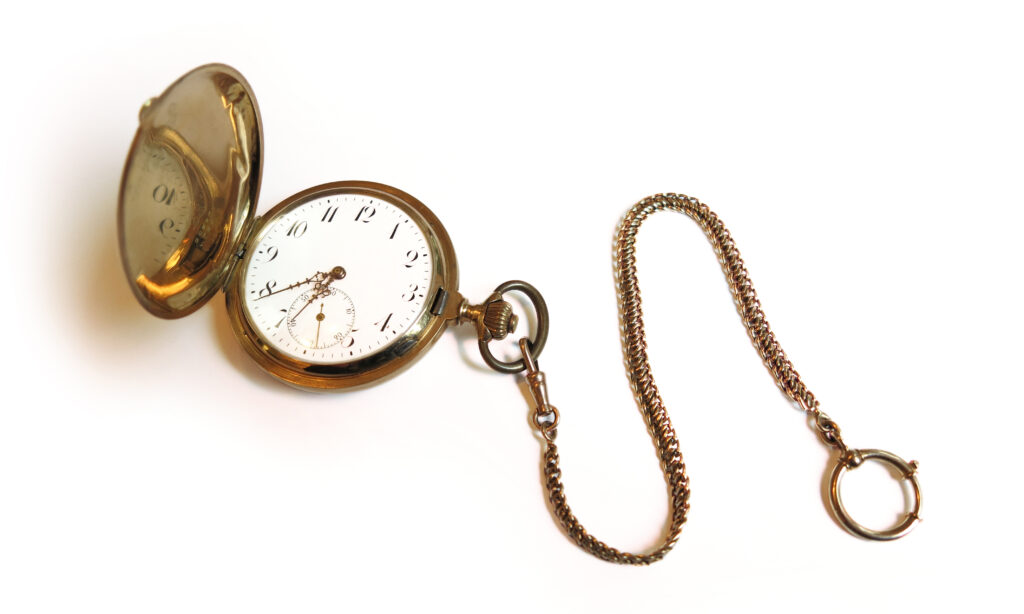
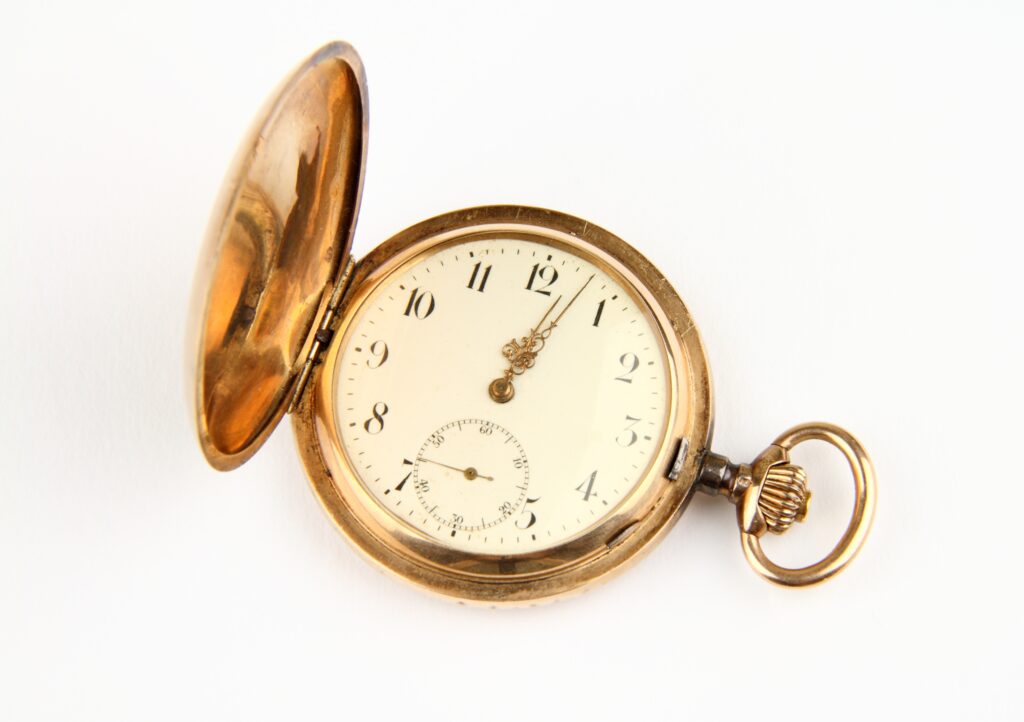
A hunter-case pocket watch has a hinged metal cover that closes over and protects the dial. Some examples also have an inner dust cover, while decorative engraving, monograms, and elaborate motifs may appear on the outer case. An open-face pocket watch does not have a front cover, leaving the dial immediately visible. This creates a simpler profile and allows the time to be read without opening the case.
Neither design is automatically more valuable. A hunter-case watch may contain a greater amount of gold because of its additional cover, while an especially heavy or elaborately decorated case may carry a premium. Hunter watches can also appeal to buyers who appreciate their traditional appearance and tactile opening mechanism.
However, case style is only one element of value. A rare open-face watch with an exceptional movement or important maker may be worth substantially more than a relatively common hunter-case watch. Equally, a fine hunter watch with an original, beautifully engraved case may be highly desirable.
Questions to Ask Before Buying a Gold Pocket Watch
Before committing to a purchase, ask the seller for as much clear information as possible. Useful questions include:
- Is the case solid gold, gold-filled, or gold-plated?
- What do the hallmarks indicate?
- Are the case and movement original to one another?
- Are the dial, hands, and other visible components original?
- Has the dial been repaired, cleaned, or refinished?
- Is the watch currently working and keeping time?
- When was it last professionally serviced?
- Have any internal or external parts been replaced?
- Has the case been polished or repaired?
- Is there any provenance, paperwork, or servicing documentation?
- Can the seller provide detailed photographs of the case and movement?
- Does the purchase include a written description or guarantee?
It is also worth comparing the asking price with other examples of a similar age, maker, material, and condition. Comparisons should be made carefully, as small differences in movements, complications, or originality can have a significant effect on value.
If important questions remain unanswered, take time to investigate further rather than feeling pressured into a quick decision. A reputable seller should be prepared to discuss the watch openly and explain how it has been described and priced.
Do You Own a Gold Pocket Watch You Are Considering Selling?
The same qualities that informed buyers look for can make an existing gold pocket watch particularly desirable. Any number of features could give your watch a value that extends far beyond the gold it contains.
This is why it is important not to make assumptions based solely on appearance, condition, or whether the watch is currently working. Burlingtons Ltd. is interested in antique and vintage gold pocket watches, including inherited, damaged, and non-working examples. We draw on decades of specialist experience, current market knowledge, and an extensive international network of collectors when assessing each piece.
Get in Touch to Sell Your Gold Pocket Watch
Our service is a personal, straightforward alternative to selling through an auction house. Begin by contacting our London office and providing details of the gold pocket watch you would like to sell. We can then carry out a preliminary assessment and advise whether a closer examination is required.
Where appropriate, we can arrange a free, discreet home valuation. Your watch will remain safely with you until you decide whether you’d like to proceed, and there is never any obligation to accept an offer. With no valuation fees, auction commissions, or hidden charges, you will know exactly how much you’re being offered. If you choose to sell your gold pocket watch, payment is immediate, too.
Contact us today to schedule your valuation and discover what your timepiece could be worth.