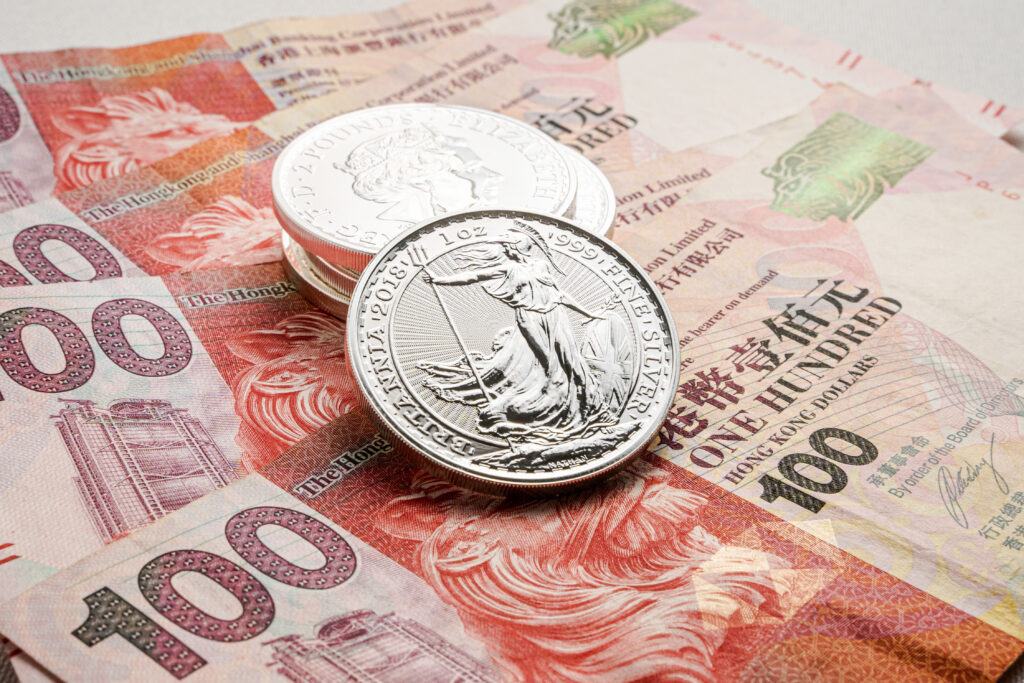
Silver Britannias are among the most recognisable bullion coins from the UK, combining precious metal with an image that has represented Britain for centuries. However, not every silver Britannia is the same. The series has evolved considerably since its introduction, with changes to its silver purity, designs, security features, and the portrait appearing on the obverse of the coin.
Whether you have recently inherited some silver Britannia coins, are building a collection, or simply want to understand more about the coins you own, knowing their history and characteristics can help you identify exactly what you have.
What are Silver Britannia Coins?
Silver Britannias are precious-metal coins. They belong to the wider Britannia bullion range, which also includes coins struck in other precious metals. Unlike ordinary circulating coins, bullion coins are primarily produced for their precious-metal content rather than everyday spending. A silver Britannia, therefore, has both a stated denomination and an intrinsic value associated with the silver it contains. Depending on the particular coin, other factors may also contribute to its desirability among collectors.
Britannia herself is the defining feature of the series. The female personification of Britain has appeared on British coinage for centuries, typically represented with symbols such as a trident and shield. This long-established imagery gives a relatively modern bullion coin a strong connection to Britain’s numismatic history.
The History of Silver Britannias
The modern Britannia bullion range began in 1987 with the introduction of the gold Britannia. This was done to give British investors a coin that could compete with international bullion. The first silver Britannias were issued ten years later, in 1997, after it became clear that the gold version had proved popular.
The original 1997 silver issue featured a design by sculptor Philip Nathan depicting Britannia driving a chariot drawn by two horses. The first proof sets contained four sizes: one ounce, half-ounce, quarter-ounce, and tenth-ounce coins.
Although the silver Britannia is consequently much younger than historic British coins such as the Sovereign, the figure from which it takes its name has a considerably longer story. Britannia first appeared on Roman coins at the time of Emperor Hadrian (117-138 AD) and returned to British coinage during the reign of Charles II in 1672. She continued to feature on different coins over the next 300 years, until being temporarily phased out in 2008.
The silver Britannia has continued to develop since 1997, creating a series in which coins from different periods can have noticeably different characteristics.y “best”, consider why you are buying it and whether the price reflects its precious-metal and, where applicable, collector value.
Who Produces Silver Britannia Coins?
Silver Britannia coins are struck by the Royal Mint, the official mint of the United Kingdom. The Royal Mint is responsible for assuring the specifications of the coins it produces, while the weight and fineness of UK bullion coins are independently tested through the annual Trial of the Pyx. This is a judicial ceremony used to test newly minted coins, making sure they match the correct weight, size, and metal purity required.
For owners, the Royal Mint connection is an important part of understanding what a genuine Britannia represents. These aren’t simply privately produced silver rounds bearing British imagery; they are official UK coins.
Are Silver Britannias Legal Tender in the UK?
Yes, silver Britannias are legal tender in the UK. However, the term “legal tender” can be slightly misleading when applied to bullion coins. It doesn’t mean that silver Britannias are intended to circulate alongside the coins in your wallet. The Royal Mint explains that non-circulating bullion and commemorative coins are not designed for ordinary spending, and businesses and banks are not required to accept them.
Their legal-tender status is nevertheless significant. In particular, UK bullion coins produced by the Royal Mint can qualify for exemption from UK Capital Gains Tax for UK residents because of this status. Tax rules and individual circumstances can change, though, so specialist advice should be sought where necessary.
What Silver Purity are Britannia Coins?
One of the most important distinctions between earlier and modern silver Britannias is their purity. Silver Britannias issued before 2013 were produced in .958 fine silver, traditionally known as Britannia silver. From 2013, the Royal Mint increased the coins’ purity to .999 fine silver.
Put simply, fineness tells you the proportion of precious metal within an alloy. A fineness of .999 means that the metal is 99.9% pure silver.
This change is particularly useful to know if you own silver Britannia coins from several different years. Two genuine Britannias can have different finenesses simply because they were produced at different stages in the history of the series.
What Types of Silver Britannias are Available?
“Silver Britannia” does not refer to one single type of coin. Over the years, The Royal Mint has produced Britannias in different formats, finishes, sizes, and designs. One of the main distinctions is between bullion and proof silver Britannias. Bullion coins are principally produced for those buying precious metals, whereas proof coins receive a specialist finish and are often produced with collectors in mind.
There are also different annual and special designs to consider. Although Philip Nathan’s standing Britannia has become closely associated with the bullion series, Britannia has been reinterpreted by different artists over time. Certain editions may therefore look considerably different from the silver Britannia someone is accustomed to seeing.
Coins can also be encountered individually, as part of sets, or in different weights. Understanding which type you own is therefore an important first step before making assumptions about its potential market appeal.
What Sizes Do Silver Britannia Coins Come In?
The one-ounce (1oz) silver Britannia is perhaps the format most readily associated with the range, but it is far from the only one.
The Royal Mint’s silver bullion range has included:
- One-ounce coins
- Half-ounce coins
- Quarter-ounce coins
- Tenth-ounce coins
The Mint has also produced other Britannia products and larger special issues at different points in the range’s history. Availability can therefore vary according to the year, edition, and whether you are looking at bullion, proof, or special-release coins.
For somebody who has inherited a collection, this is worth remembering. A smaller Britannia is not necessarily an imitation or an incorrectly sized version of the familiar one-ounce coin; it may simply be a genuine fractional issue.
Are There Any Other Differences Between Old and New Silver Britannias?
The change in silver purity is one of the clearest differences, but it isn’t the only way in which silver Britannias have evolved. Designs have changed, different portraits of the reigning monarch have appeared on the obverse, and modern bullion Britannias have gained sophisticated visual security features.
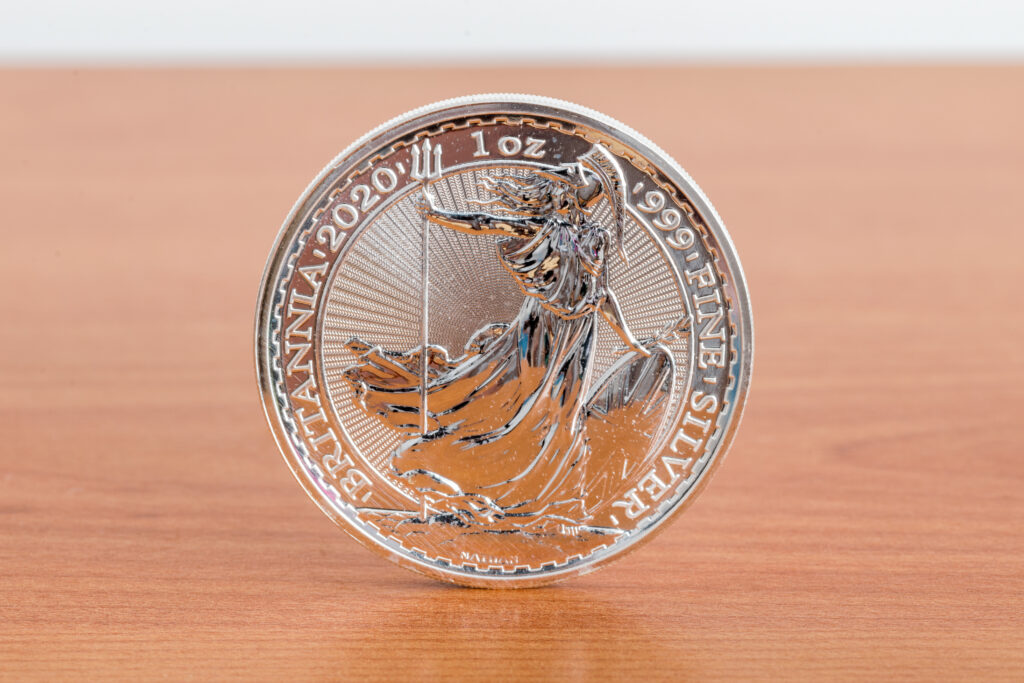
In 2020, the Royal Mint unveiled a new version incorporating four security features: a latent image that changes between a padlock and trident as the coin is moved, surface animation creating the appearance of waves, micro-text, and tincture lines on Britannia’s shield. These all help to prove a coin’s authenticity when examined.
More recently, Britannias have also reflected the transition from Queen Elizabeth II to King Charles III, with the King’s official coinage portrait appearing on newer examples.
These differences mean that the year of a silver Britannia can tell you much more than simply when it was produced.
Why Does the Britannia Design Change Over Time?
Britannia is an ancient symbol, but she has never been a completely static one. Artists have repeatedly reinterpreted the figure to reflect different ideas about Britain and its identity. Across Britannia coinage, she has appeared in different poses and settings, while familiar attributes including her trident, shield, and helmet have helped maintain a recognisable connection between different interpretations.
The modern bullion design is closely associated with Philip Nathan’s depiction of a standing Britannia. She holds a trident, carries a shield, and has an olive branch in her hand, representing her connections with the sea, defence, and peace, respectively.
Design variation also gives silver Britannias another dimension beyond their precious-metal content. Certain dates, designs, and editions may naturally be more interesting to collectors than others, something we explore in greater detail in our guide to collecting silver Britannias.
Why are Silver Britannia Coins So Popular?
Part of the popularity of Silver Britannias comes from the combination they offer. For bullion buyers, they provide a recognisable way of owning physical silver produced by the Royal Mint. Their legal-tender status and established international recognition are additional characteristics that can make them attractive.
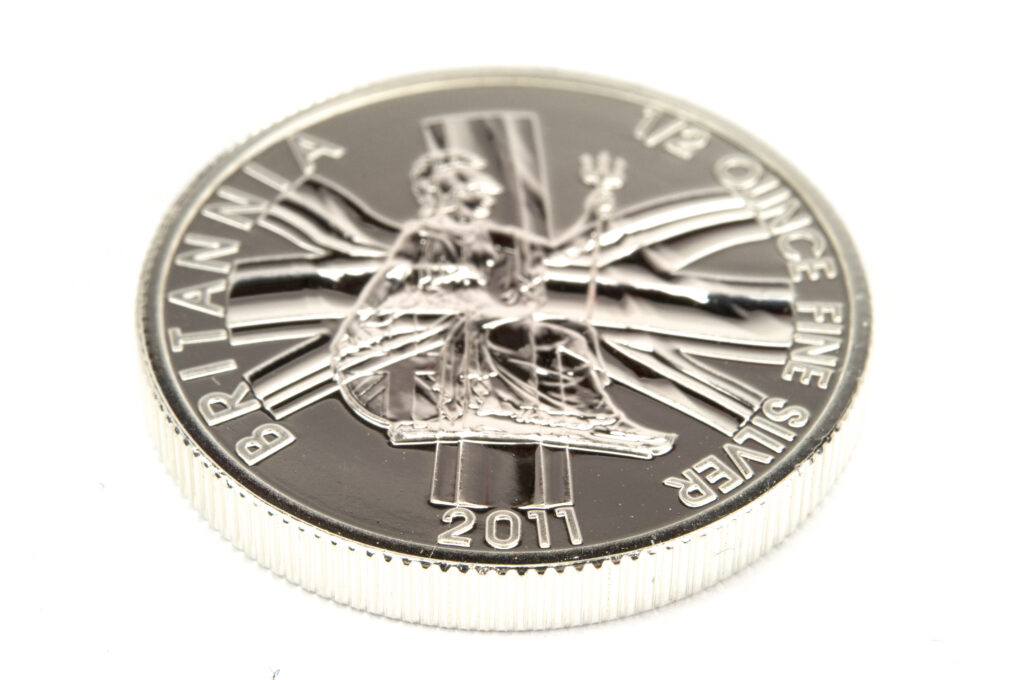
For collectors, meanwhile, there is much more to explore. Different dates, changing portraits, proof issues, special designs, fractional sizes, and older .958-fineness coins provide plenty of variation within the series.
The result is a coin that can appeal to someone principally interested in silver as a precious metal while simultaneously having a place within a carefully assembled coin collection.
Understanding the Silver Britannias You Own
If you already own silver Britannias, identifying them correctly is more useful than simply checking how many coins you have. Look at the date, weight, denomination, design, and condition of each coin. Establishing whether you have bullion or proof coins and whether any form part of a particular set or special issue can also help build a clearer picture of your holdings.
The age of a coin alone does not determine its value, nor should every silver Britannia be assumed to be worth exactly the prevailing price of its silver content. Condition, rarity, collector demand, and the specific issue can all become relevant when a coin is professionally assessed.
This becomes particularly important with inherited collections, where several different types or generations of silver Britannia may have been accumulated over many years.
Valuing Your Silver Britannias Through Burlingtons Ltd.
Once you understand the silver Britannia coins you own, you may decide that the time is right to sell some or all of your collection. Getting them valued correctly by an expert is the next important step. At Burlingtons Ltd., our team has decades of experience in valuing precious metals, coins, and other high-value collectables, supported by an extensive network of collectors and buyers.
Whether you have an individual silver Britannia, a set of coins, or a larger collection, we can assess what you own and provide a straightforward valuation based on the items and the current market.
Book Your Valuation Today
Our service offers a personal alternative to selling through an auction house, with no valuation fees or hidden charges, and immediate payment when a sale is agreed. Where appropriate, Daniel can also arrange a discreet home valuation, allowing valuable collections to remain securely with you while they are assessed.
If you have silver Britannias you are considering selling, contact Burlingtons Ltd. today with details and photographs of your coins to begin the valuation process.