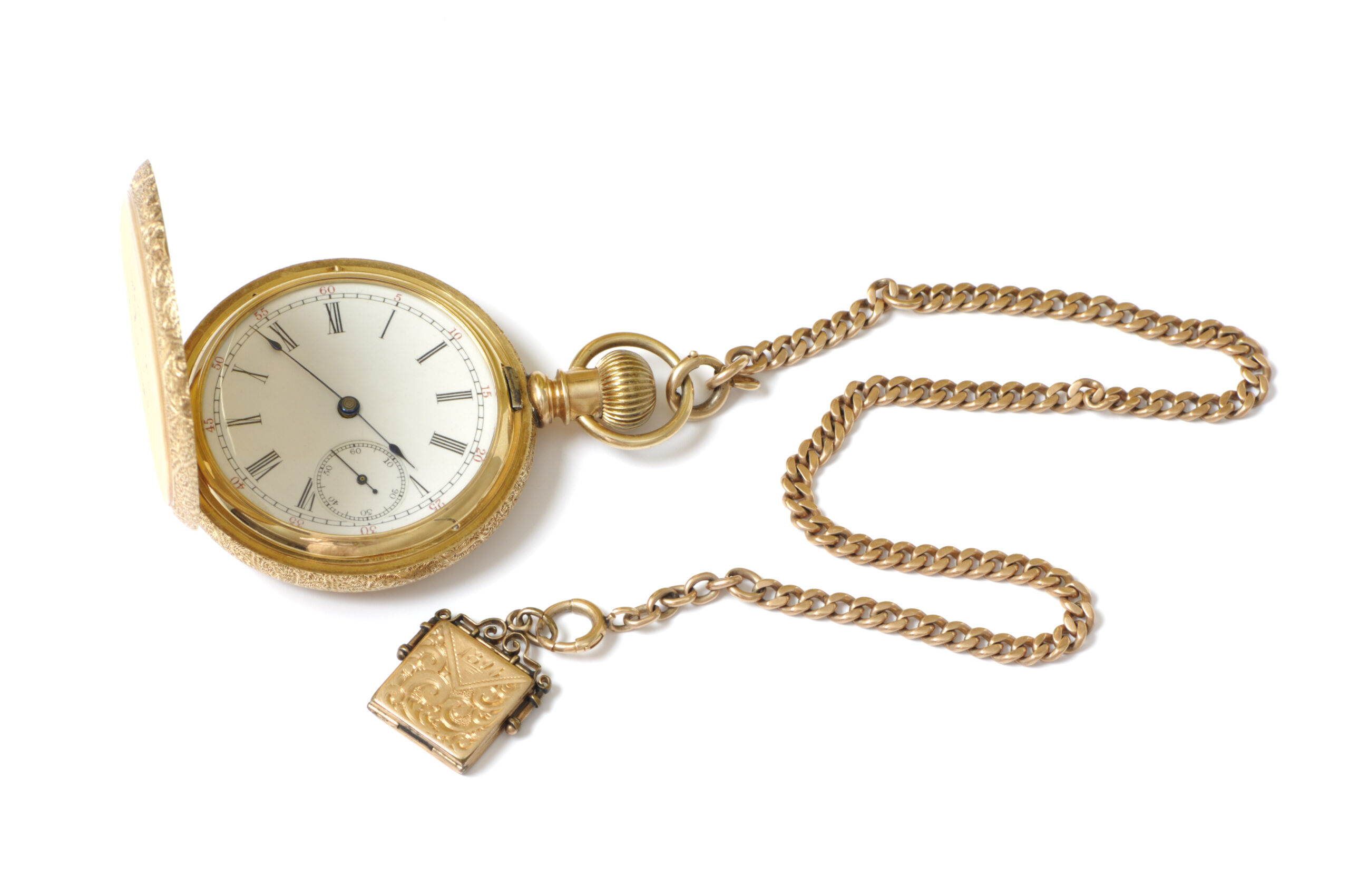
Gold pocket watches occupy a distinctive place in the world of collecting. Combining precious metals, intricate mechanical craftsmanship, and often a tangible connection to the past, each example can offer something different. Some are admired for their movements, others for their cases or makers, while particularly rare watches may be sought for their provenance or unusual features.
Whether you’re considering your first purchase, developing an established collection, or assessing a watch you’ve inherited and wish to sell, understanding what collectors look for can help you make informed decisions. In this guide, we’ll draw on more than 25 years of experience with antique watches, jewellery, and collectables to identify the qualities that can make a gold pocket watch especially desirable.
Why are Gold Pocket Watches Becoming Popular Again?
Gold pocket watches appeal to collectors in the modern day for many reasons.
The first is as interest in traditional craftsmanship and mechanical objects has grown, more people have begun to appreciate the skill that went into creating these historic timepieces. Unlike a modern, mass-produced accessory, an antique pocket watch may have been assembled and finished by highly skilled craftspeople. Its movement, dial, and case can each reveal details about when and where it was made, the techniques used, and the person it may have been intended for.
There is also the appeal of owning something individual. Even when two watches were produced by the same maker, differences in condition, engraving, case design, and history can give each one its own identity. Presentation inscriptions and family provenance can add another layer of interest, connecting a watch to a particular person, occasion, or period.
Naturally, the gold case brings further appeal. Although the value of a collectible pocket watch is not determined by its gold content alone, precious-metal value can provide an additional point of interest.
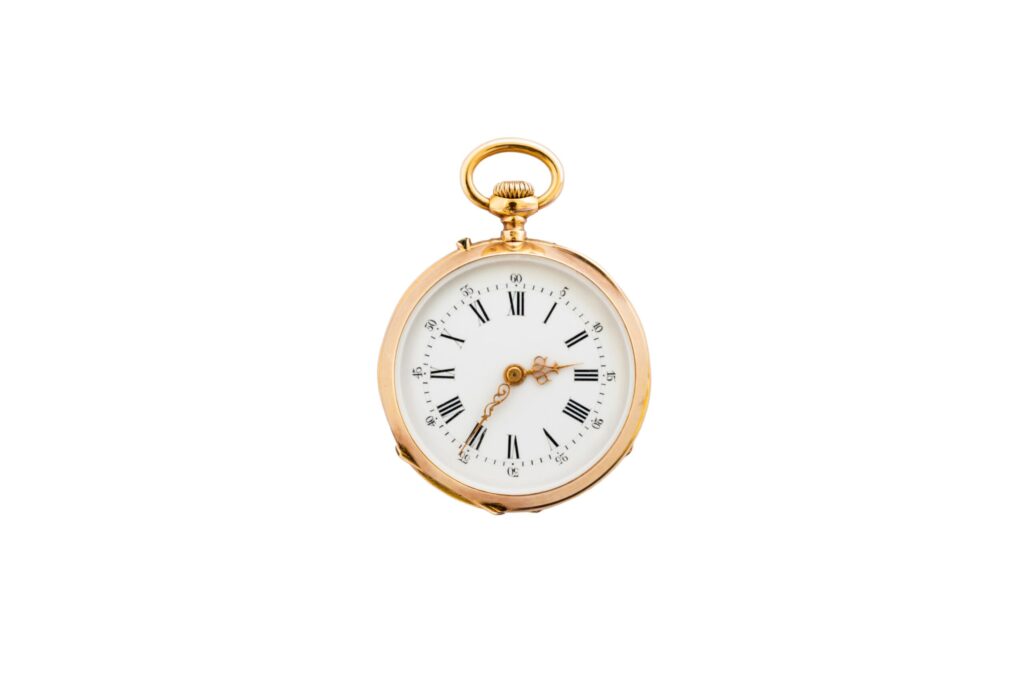
What Should You Look for When Collecting Gold Pocket Watches?
There is no single feature that determines whether a gold pocket watch is worth collecting. Starting a collection may come down to individual taste, and whether something is desirable outside of that will usually depend on several qualities considered together.
Important factors include:
- Maker: Watches by respected manufacturers and watchmakers (such as Tiffany & Co., Waltham, and Omega) can attract greater collector interest, particularly when the movement is signed and can be authenticated.
- Age: The period in which a watch was made can affect its design, movement, and historical importance. However, age alone does not guarantee rarity or value.
- Gold purity and hallmarks: Hallmarks can provide valuable information about the case, including its gold purity, place of assay, and approximate date.
- Movement: The movement’s quality, complexity, maker, and condition are all important. Complications and unusually fine finishing can increase interest.
- Condition: Collectors will consider the condition of the case, dial, hands, and movement, as well as whether the watch is currently working.
- Originality: Watches that retain their original components are often preferred to those that have been extensively altered.
- Provenance: Original boxes, paperwork, receipts, service records, and evidence of previous ownership can help establish a watch’s history.
- Rarity and demand: A scarce feature can make a watch more desirable, but its value will also depend on whether collectors are actively seeking that feature.
Before buying a significant piece, it’s recommended that you examine it carefully and seek specialist advice where necessary. Two watches that appear similar at first glance can differ considerably once their cases and movements are properly assessed.
What Makes a Gold Pocket Watch Rare?
A gold pocket watch does not become rare simply because of its age. Many watches were produced in large numbers, while others survive in much smaller quantities.
Rarity may be linked to low production numbers, an unusual movement, or a distinctive case design. Watches featuring complications, or functions beyond straightforward timekeeping, may also be scarcer. This is particularly true when produced by a well-regarded maker. Repeaters, chronographs, and calendar displays are examples of complications that can add technical and collecting interest.
Other potentially important characteristics include:
- Unusual or experimental movements
- Transitional designs from an important period in watchmaking
- Cases made in higher gold purities
- Enamel, engraved, or gem-set cases
- Watches commissioned by notable retailers
- Pieces created for a particular client or market
- Examples with a documented connection to a significant person or event
Condition and completeness must also be considered. A rare watch that retains its original dial, hands, case, and movement may be more appealing than another example that has undergone extensive alteration.
Do Limited-Production Gold Pocket Watches Always Command Higher Prices?
A watch produced in small numbers can attract a premium, but limited production does not automatically result in a high valuation. This kind of scarcity must usually be accompanied by demand as well. Collectors may pay more for a limited-production watch when it was made by a respected name, if it incorporates an unusual complication, or if it represents an important stage in the maker’s history. Excellent condition, original components, and documented provenance can strengthen its appeal further.
On the other hand, a watch may be extremely scarce because few were originally made, but if the manufacturer or design attracts little collector interest, that scarcity may not translate into a significantly higher price.
This is why gold pocket watches should be assessed individually.
Why Do Collectors Prefer Untouched Gold Pocket Watches?
In collecting terms, an “untouched” pocket watch is generally one that retains as much of its original character as possible. It may show signs of age, but its important components have not been replaced or extensively restored. Collectors often appreciate these original features because they provide a more authentic representation of the watch as it was made, and any wear forms part of its history.
Heavy polishing can be particularly problematic. Although polishing may make a gold case appear brighter, it can soften engraved details, round the edges of the case, and reduce the clarity of hallmarks. Refinished dials and non-original replacement parts can also affect collector interest.
What Does This Mean for Servicing a Gold Pocket Watch?
None of this means a pocket watch should never be serviced or repaired. Sensitive work carried out by a suitably experienced watchmaker can help preserve its movement and prevent further damage. The key is to avoid unnecessary or irreversible changes.
If you own a gold pocket watch that you may wish to sell, seek advice before having it polished, restored, or modified. A watch that appears worn to an untrained eye may retain details that are important to a specialist collector.
Are Mechanical Gold Pocket Watches More Desirable Than Quartz Reproductions?
Collectors generally prefer genuine mechanical gold pocket watches to modern quartz reproductions. In an antique pocket watch, the mechanical movement is a central part of the object’s appeal. It reflects the knowledge, precision, and workmanship of the period in which it was produced. A well-made hand-wound movement can also be visually impressive as well as technically interesting. Its construction and finishing may help identify its maker and where it fits within the development of watchmaking.
Quartz reproductions can still be attractive and practical. Some have decorative cases or offer the appearance of a traditional pocket watch without the maintenance associated with a mechanical movement. However, they will not ordinarily have the same historical importance or mechanical interest as an authentic antique example.uced beautifully engineered gold pocket watches that remain highly collectable today, especially when preserved in original condition.
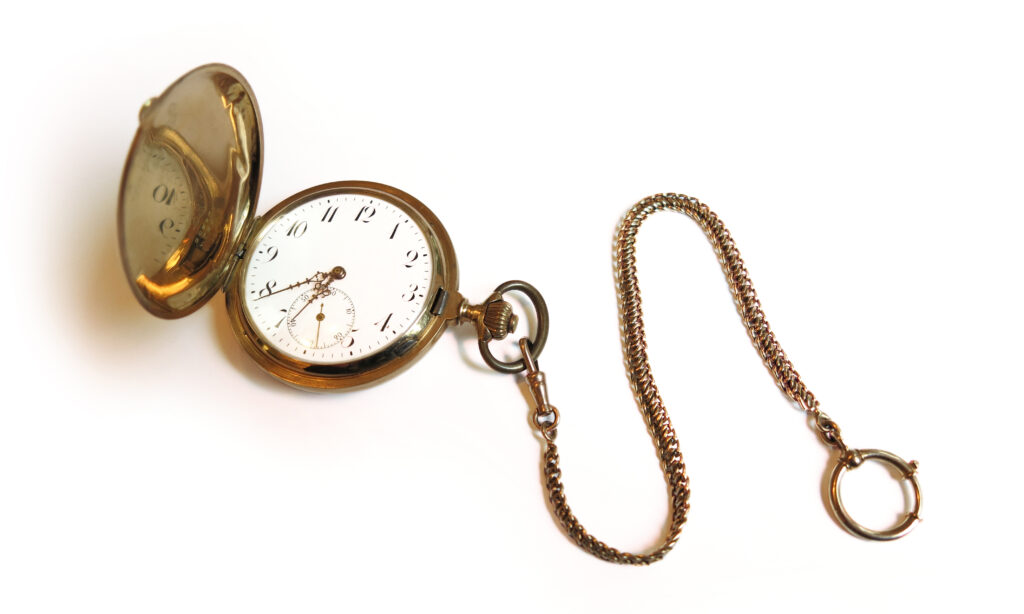
Are Gold Pocket Watches a Better Investment Than Modern Wristwatches?
Neither gold pocket watches nor modern wristwatches can be described as “better” investments overall. Both markets contain highly desirable pieces, but value is influenced by the qualities of the individual watch and changing levels of collector demand.
Modern luxury wristwatches often benefit from widespread brand recognition and a large international market. Certain models may be in particularly strong demand, although prices can change as tastes and availability shift. Gold pocket watches, on the other hand, offer appeal in the form of historical significance, mechanical craftsmanship, rarity, and precious-metal content. Some can be acquired for less than an equivalent-quality wristwatch, while exceptional examples may achieve substantial prices.
No watch is guaranteed to increase in value. For many people, the most rewarding approach is to choose pieces they genuinely admire while treating any future financial return as a possibility rather than a certainty.
Building a Meaningful Gold Pocket Watch Collection
A collection doesn’t need to be the largest, or the most valuable, or in any way “the best” to be worthwhile. Choosing a particular focus can help you build a group of pocket watches that feels coherent and reflects your own interests.
You might decide to collect from a certain historical period, examples by a particular maker, or pieces with a specific type of movement. Other collections are built around decorative cases, presentation watches, British watchmaking, or examples from different gold standards.
Whichever direction you choose, it can help to:
- Prioritise quality and originality over quantity
- Research makers, movements, and hallmarks
- Retain boxes, paperwork, and service records
- Record when and where each watch was acquired
- Avoid unnecessary polishing and alterations
- Use an experienced specialist for servicing
- Review your collection as your knowledge and interests develop
It’s also important to remember that many collectors’ tastes change over time. You may decide to refine your collection, replace an early purchase with a better example, or sell watches that no longer fit your chosen area. Obtaining an informed valuation can help you decide what to retain and when it may be appropriate to sell.
Sell Your Gold Pocket Watch to Burlingtons Ltd.
If you own a gold pocket watch that no longer forms part of your collection, we can help you understand its history, desirability, and current market value. We purchase individual watches and larger collections, including inherited pieces, watches requiring repair and examples whose makers or origins are not yet known.
Get in touch with us to start the process, and we’ll go through an initial assessment online or over the phone. Our experts bring more than 25 years of experience and an extensive international network of collectors, dealers and watch specialists to every valuation. Where a closer examination is required, we can also arrange a discreet home visit, allowing your valuable timepiece to remain safely with you throughout the process.
All valuations are free and no-obligation, and any payment accepted will be made to you immediately via BACS transfer. Contact us today and discover what your gold pocket watch could be worth.