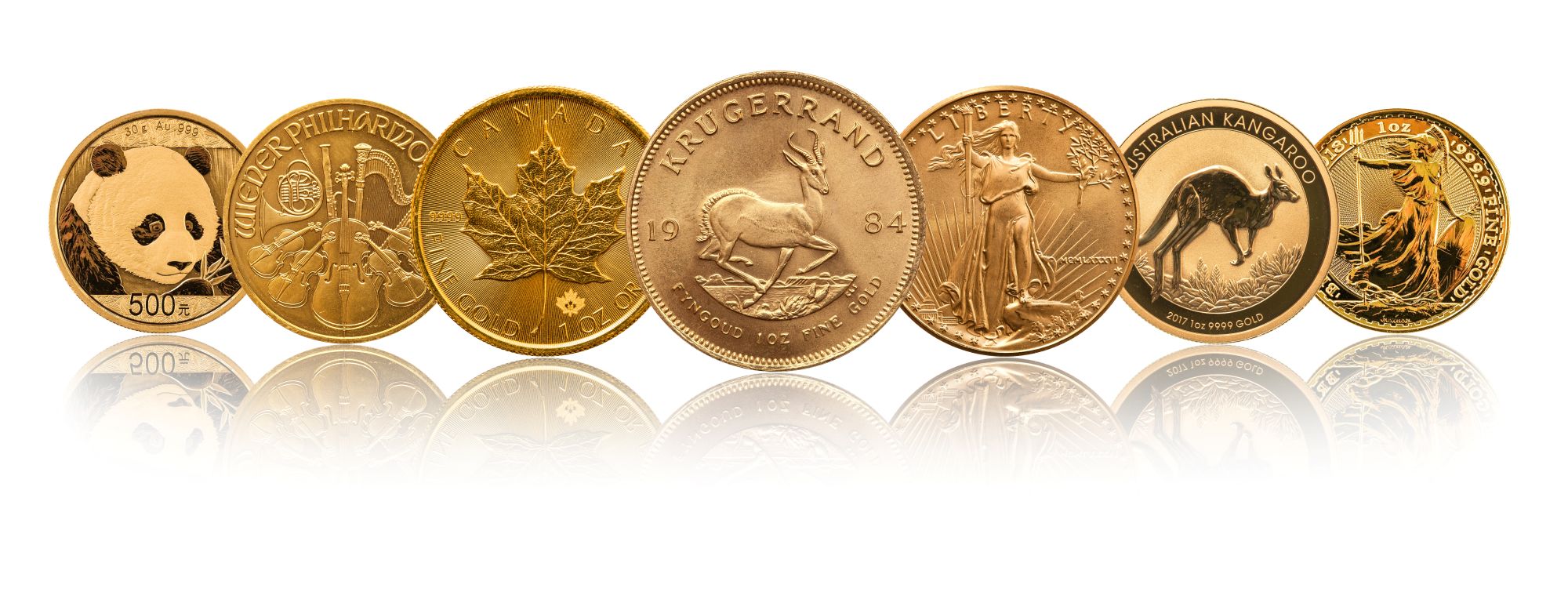
Gold coins can look similar at a glance, but there is more than one type. These types also don’t always behave the same way when it comes to value, demand, and resale. This matters because people buy gold coins for different reasons. Investors, for instance, often want consistency, a straightforward resale, and coins they can value quickly. Meanwhile, collectors may focus on specific monarchs, mint marks, errors, low-mintage years, or coins graded by a recognised service.
If you’re looking to buy, collect, or sell gold coins, it helps to know exactly what you’re dealing with. In this guide, we’ll walk through the main types of gold coins, highlight the best-known UK favourites, and explain what separates modern bullion from genuinely collectable pieces.
The Primary Types: Modern Bullion Coins vs Historic (Numismatic) Coins
Broadly, most types of gold coins fall into two main types. These are modern bullion coins and historic (numismatic) coins. Understanding whether you’re dealing with bullion or something more historical can make a real difference when you’re considering selling.
What Defines a Bullion Coin?
A bullion coin is typically designed to be traded based on its gold content. Common traits include:
- Clear weight and purity specifications
- High mintage volumes
- Recognisable, standardised formats
- Easier pricing against the broader gold market
For many investors, that simplicity is the appeal. You can often get a fast sense of value because the market is active and comparisons are straightforward.
What Makes Historic Coins Behave Differently?
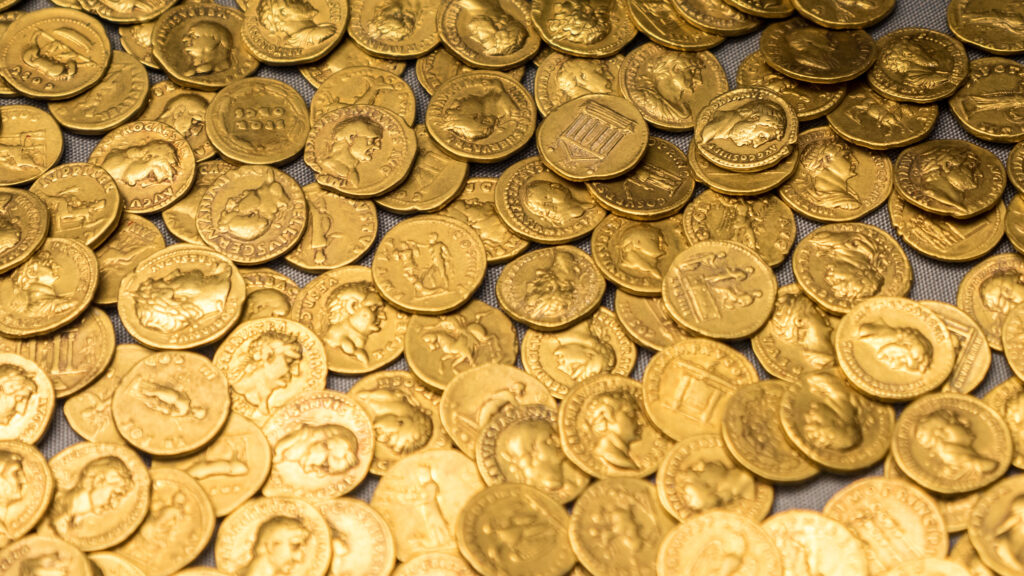
Historic coins may still contain gold, but their market value is often shaped more by rarity, history, and collector demand than by melt value. Some may command significant premiums because buyers are competing for a scarce year, a specific monarch, a small mintage, or a coin with meaningful provenance.
That’s why historic coins can sometimes feel less predictable than bullion. They may not track the gold market in a neat line because their value is influenced by collector behaviour as much as metal prices.
Is This What’s Meant by a Coin Being “Collectable” Instead of “Bullion”?
Yes. A gold coin becomes “collectable” when its value is driven by more than the gold content, so a historic coin is most usually going to be a collectable coin. But the coin doesn’t necessarily have to be old. Even relatively modern coins can become collectable if the right factors are present. The most common drivers for all coins include:
- Rarity and Low Mintages: Scarcity tends to attract demand, particularly if collectors are building date sets or chasing specific issues.
- Mint Marks and Varieties: Small design variations, mint marks, or known varieties can significantly affect interest and price.
- Age and Historical Significance: Coins linked to a particular era, monarch, or historical moment often carry added appeal.
- Condition and Grading: Collectors tend to pay for quality. A small jump in condition can sometimes create a big jump in value.
- Special Editions or Error Coins: Certain errors, limited releases, or distinctive editions can become highly sought after.
Wear, Condition, and Grading for All Gold Coins
It’s important to note that condition matters for all coins, but it matters differently depending on the type:
- A bullion buyer may accept normal handling marks on a gold coin because they’re focused on metal content and recognisable specifications.
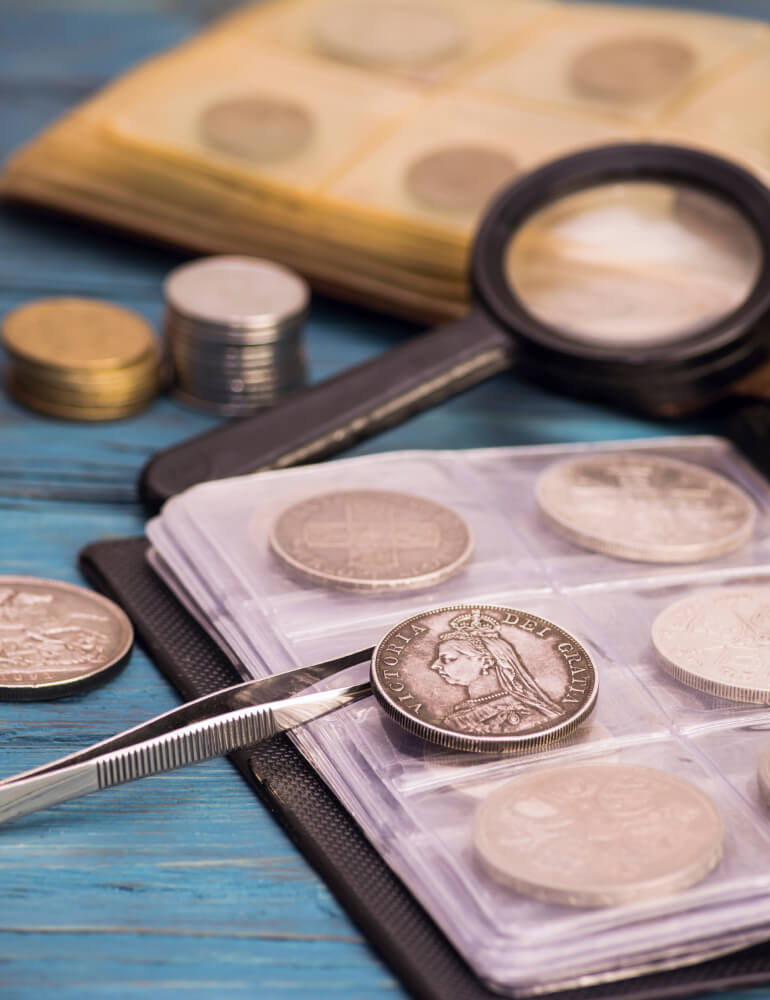
- A collector may pay substantially more for a coin in exceptional condition, especially if it’s been authenticated and graded by a recognised service.
If you suspect a coin might be desirable beyond its gold content, careful handling and proper assessment can be important.
The Most Popular Gold Coins in the UK
In the UK market, the most widely recognised gold coins tend to be the ones that are easiest to identify and easiest to trade. If you’re sorting through a collection at home, these are often the names you’ll hear first.
UK Staples
Gold Sovereigns: Sovereigns are a cornerstone of the UK gold coin market. They’re familiar, widely collected, and regularly bought and sold, which is why they’re often one of the first coins people think of when they search for UK gold coins.
Half Sovereigns: Half Sovereigns are also very common. Their smaller size makes them a popular choice for buyers who want a lower entry point, and they often appear in inherited collections or mixed gold coin bundles.
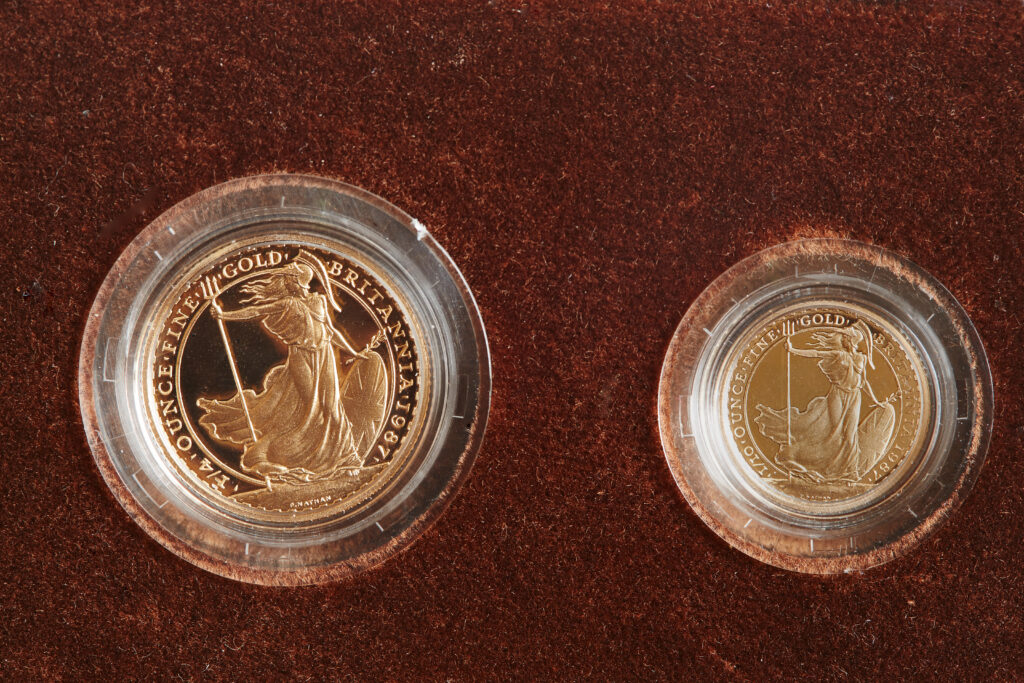
Gold Britannias: The gold Britannia is one of the most recognisable modern bullion coins associated with the Royal Mint. Because it’s widely traded and easy to compare by specification, it’s often chosen by investors who want consistency and clear pricing.
Royal Mint Commemoratives
Not all modern coins are “just bullion”. Some Royal Mint commemorative releases can attract collector interest, especially where there are limited mintages, distinctive designs, special finishes, or presentation formats. Two coins with the same metal content can end up valued differently if one has a stronger collector following.
International Bullion Coins Commonly Traded in the UK
You’ll also commonly see international bullion coins circulating in the UK, especially among investors who prefer globally recognised names. Favourites include:
- South African Krugerrands
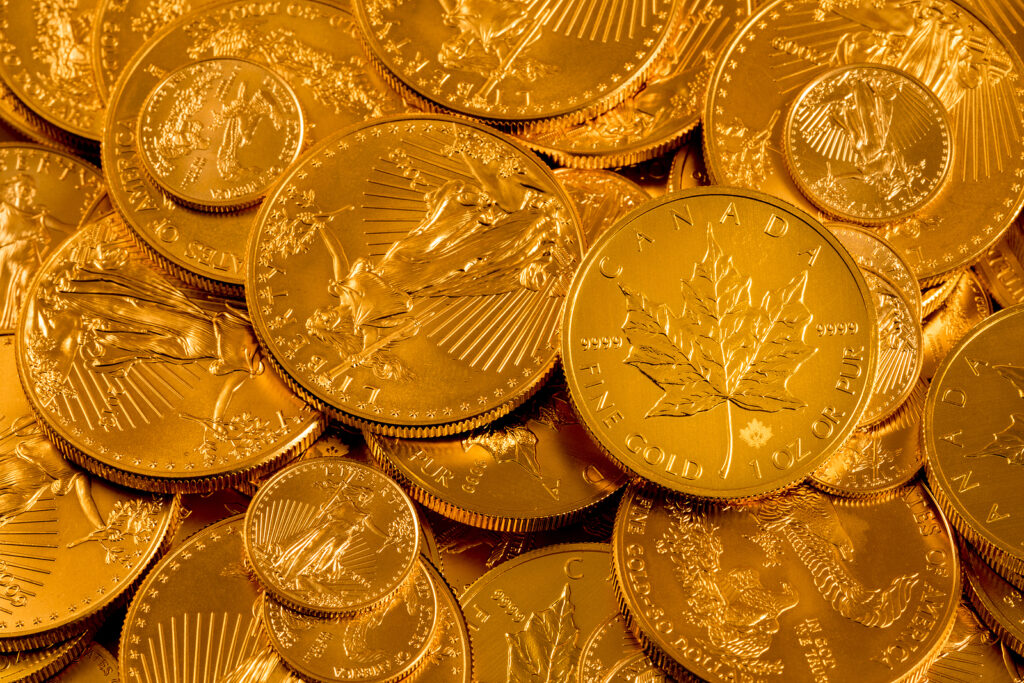
- Canadian Maple Leafs
- American Eagles
- Chinese Gold Pandas
These are often traded in standard sizes, including the popular 1 oz gold coin, where consistent specifications and broad recognition help keep the market active and resale straightforward.
What is a Gold Sovereign?
The Sovereign is one of the most iconic gold coins in the UK, and for many sellers, it’s the first coin type they encounter through inheritance or family collections.
A Brief History (1489 to Today)
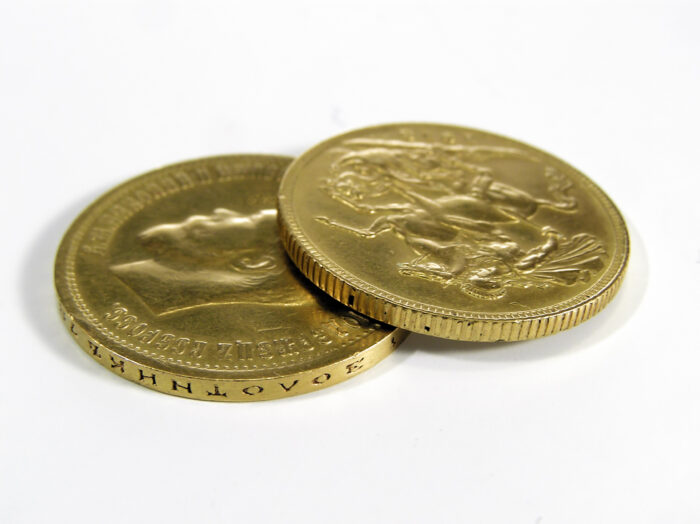
The first Sovereign dates back to 1489, originally struck under Henry VII. Over the centuries, the coin evolved and became especially well known during the Victorian era. Today, modern Sovereigns and the many Sovereigns produced across different historical periods remain widely collected and traded, which is why the name carries weight in the UK gold market.
The St George and the Dragon Tradition
One of the most recognisable features of the Sovereign is its design tradition, particularly St George and the Dragon. That imagery has become a symbol in its own right, and recognisability plays a real role in liquidity. Coins that buyers can identify quickly are often easier to discuss, value, and resell.
Sovereign Sizes and Denominations
Sovereigns also come in multiple denominations and formats, including:
- Full Sovereign
- Half Sovereign
- Quarter Sovereign
- Double Sovereign
This variety gives buyers and sellers more options. Some people collect by size, others by year or monarch, and some prefer smaller denominations to match a set budget or a particular type of collection.
Why Sovereigns are Trusted Worldwide
Sovereigns remain popular because they sit at a rare crossroads of history, recognisability, and ongoing demand. They’re widely understood in the UK, but also appreciated internationally, thanks to their long-standing reputation and collector base. That global trust can be helpful when a coin’s value is driven by more than just the gold content.
Choosing Between Gold Britannias and Gold Krugerrands
A common comparison for UK buyers is the gold Britannia coin versus the Krugerrand gold coin. Both are well-established, both are widely traded, and both can be highly liquid. But there are a few differences people tend to consider.
Purity and Composition (24c vs 22c)
One of the first things many people look at is purity. Britannias are commonly associated with higher-purity bullion standards, while Krugerrands are traditionally 22-carat alloyed coins. In practice, both have strong markets, but the composition can influence how buyers perceive the coin, and sometimes how premiums are set in different markets.
UK Tax Considerations
Another reason Britannias are often discussed in the UK is the potential tax angle that’s commonly associated with certain UK legal tender coins. For some investors, that can form part of the decision-making process when comparing options. Individual circumstances vary, so it’s always sensible to take appropriate professional advice for your situation.
Liquidity, Demand, and Buyer Familiarity
Liquidity often comes down to familiarity. The Krugerrand has global name recognition and a long history as a bullion coin, with strong demand across international markets. On the other hand, the Britannia tends to have particularly strong recognition in the UK and benefits from the Royal Mint ecosystem.
When it comes to resale, the “best” option is often the one that is most familiar to your likely buyer pool and fits your timeframe.
Premiums and Pricing Behaviour
Bullion coins are often priced as gold value plus a premium. That premium can vary based on demand, availability, condition, and what buyers prefer at that point in time. Two 1-oz coins might track gold prices closely, but still sell at different levels depending on market sentiment and recognition.
Getting a Clear Valuation Before Selling Gold Coins
Whether you have a handful of Sovereigns, a selection of Britannias, or a mixed group of historic coins, the most important first step is understanding what is driving the value.
At Burlingtons Ltd., we keep the process straightforward and discreet with:
- A personal home valuation service for convenience, privacy, and peace of mind
- A clear explanation of what you have, including whether coins are valued as bullion or collectables
- No fees or hidden charges
- Immediate payment if you choose to sell
Discover What Your Gold Coin Types Are Worth
If you’re considering selling gold coins and want a valuation you can trust, contact Burlingtons Ltd. to discuss what you have. Share a few details (and photos if possible), and if an in-person assessment is needed, one of our experts can arrange a private visit at a time that suits you. It’s a calm, confidential way to understand your options and, if you decide to go ahead, sell with confidence.