Gold jewellery has captivated civilisations for thousands of years and has remained one of the most enduring symbols of wealth, beauty, and personal expression. Its rarity, durability, and unmistakable lustre have ensured its place at the centre of human history. These same qualities continue to influence its value even today.
Understanding the history of gold jewellery not only reveals its cultural significance but also helps you start thinking about the true value of the pieces you may own.
Where Did Gold Jewellery Originate?
Gold jewellery dates back over 6,000 years, so we cannot say for sure where jewellery using the metal specifically originated, nor the first people to use it. Unlike other metals, gold does not tarnish or corrode, making it ideal for both decorative and ceremonial use. As such, it’s found across a large number of ancient civilisations.
That being said, the oldest examples that have ever been found were unearthed in the Varna Necropolis in Bulgaria. The collection of over 3,000 artefacts, including necklaces and bracelets, was dated to roughly 4600 – 4300 BC, making those pieces approximately 6,600 years old.

A Few Key Places and Eras in the History of Gold
Ancient Egypt
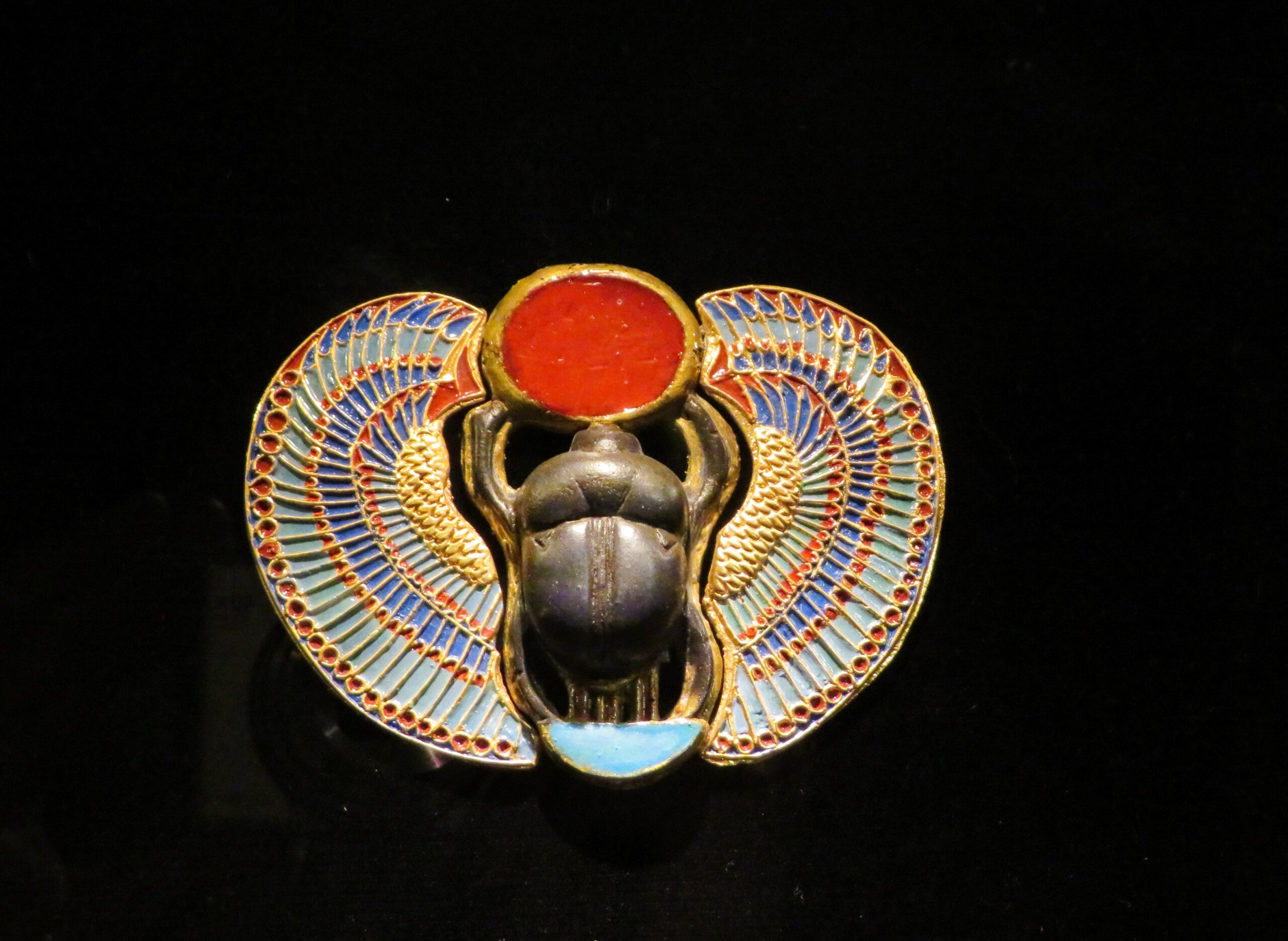
In ancient Egypt, gold was considered the flesh of the gods, particularly associated with the sun god Ra. It symbolised eternity, immortality, and divine power, which is why it played such a central role in burial practices. Pharaohs and high-ranking individuals were buried with elaborate gold jewellery to accompany them into the afterlife, reflecting both their status and spiritual beliefs.
Intricate necklaces, amulets, rings, and funerary masks showcased remarkable craftsmanship. Egyptian goldsmiths were highly skilled, using techniques such as hammering, casting, and inlaying semi-precious stones like lapis lazuli and turquoise. Each piece was not only decorative but deeply symbolic, often believed to offer protection and guidance in the afterlife.
India
Gold has held profound cultural and religious importance in India for thousands of years, far beyond its role as an adornment. With origins in beads in the Indus Valley, it had evolved into complex gold work by the 1st century BC, and by the time of the Mughal Empire (16th – 19th century), it had become an art form. Many of its styles were and still are heavily influenced by Persian art as well as local traditions, with popular techniques including kundan (setting gems in pure gold) and minakari (enamelling).
Gold jewellery still plays a central role in major life events in India. As in many other cultures, it’s seen as a symbol of prosperity, purity, and good fortune, and is often linked to the goddess Lakshmi, who represents wealth and abundance. It’s both a display of status and a form of financial security at weddings, especially. Bridal jewellery sets are often extensive, with each piece carrying traditional meaning. Many items are passed down through generations, becoming treasured heirlooms that hold both emotional and monetary value.
This enduring cultural significance continues to influence global demand for Indian gold jewellery today.
Mesopotamia
Mesopotamian civilisations, including the Sumerians, Akkadians, and Babylonians, were among the first to experiment with and refine advanced goldworking techniques like granulation (attaching small gold spheres) and filigree (shaping delicate wires). Since gold was not native to southern Mesopotamia, it was imported there from regions like Iran and Afghanistan. It was often paired with lapis lazuli (which was also imported from Afghanistan) and carnelian.
Pieces were often highly intricate, featuring layered designs, chains, and detailed motifs inspired by nature and mythology. Gold jewellery in Mesopotamia was worn by both men and women as a symbol of status and wealth, and it also played a role in religious ceremonies due to its association with the sun and divine power. The sophistication of these early designs laid the foundation for many techniques still admired and used today.
Ancient Greece and Rome
The Greeks and Romans brought gold jewellery to new levels of refinement and artistry. Greek goldsmiths introduced delicate techniques such as filigree and granulation, creating fine, lace-like patterns that required exceptional precision. Many of these were influenced by work created in Egypt and Middle Eastern countries, and designs became even more lavish after gold availability increased, following Alexander the Great’s conquests in the Hellenistic period (323 – 321 BC).
Jewellery during this period was not only decorative but also expressive, often depicting mythological scenes, deities, creatures like rams and bulls, and other symbols of power. The Romans, in particular, embraced jewellery as a clear indicator of wealth and social standing. Taking inspiration from Greek designs, which were considered in vogue, they added their own love of bold colour and large gemstones to make it their own. Gold rings, bracelets, and necklaces were widely worn, with certain styles even restricted by law to specific classes, reinforcing their association with status and authority.
Roman pieces also popularised the use of cameos and introduced the opus interrasile technique, a method of piercing gold to create intricate, lattice-like designs.
The Middle Ages
During the Middle Ages, gold jewellery became more restrained in appearance but richer in meaning. It was largely reserved for the nobility and the Church, as gold remained a scarce and valuable resource in the earlier part of the period. As gold became more widely available owing to trade and expansion, the craftsmanship became more refined; rings became more delicate, and necklaces started to gain popularity. However, the Sumptuary Laws prevented the lower classes from accessing these goods.
Designs often featured religious motifs, inscriptions, and symbolic imagery, reflecting the dominant influence of Christianity, moving from early but ornate Germanic styles and Byzantium-influenced pieces to heavy, highly stylised Gothic forms. Goldsmiths heavily used techniques like filigree, granulation, and enamelling to decorate items. Gems were typically polished into cabochons rather than cut, with pearls, sapphires, rubies, and emeralds being highly prized. Carved Roman and Greek stones were also often repurposed into medieval gold jewellery, particularly in rings.
While craftsmanship remained important, the emphasis during this period shifted towards the message and symbolism behind each piece. Rings, brooches, and pendants were commonly used to signify faith, allegiance, or social rank. Reliquaries were also commonly adorned and used to display holy items.
The Renaissance
The Renaissance (1400 – 1600 AD) marked a renewed appreciation for art, culture, and individual expression, and this was reflected in gold jewellery. Pieces became more opulent yet intricate, detailed, and expressive. They often incorporated enamel work, gemstones and pearls, and symbolic imagery that moved away from simpler Medieval designs to celebrate humanism and classical antiquity, with a renewed interest in Roman and Greek mythology. Scenes featuring sea monsters, mermaids, and mythological figures were very much in fashion. Religious imagery and Biblical also remained popular, along with personal items like initialled pendants.
Master goldsmiths gained recognition for their skill, and jewellery became a form of wearable art. Designs were influenced by classical antiquity, mythology, and the natural world, resulting in highly decorative and unique creations. This period set new standards for craftsmanship and creativity that continue to influence jewellery design today.
The Spanish Conquest of South America
The Spanish conquest of South America in the 16th century had a profound impact on the global gold market. Vast quantities of gold were extracted and transported to Europe, significantly increasing supply and transforming jewellery production. This influx of gold allowed for more elaborate and ornate designs, particularly among the European elite. However, it also led to the widespread loss of indigenous gold artefacts and traditional craftsmanship from South American cultures, many of which were melted down or lost. As a result, surviving pieces from these civilisations are now exceptionally rare and highly valued.
The Industrial Revolution
The Industrial Revolution (1750 – 1900) brought significant changes to jewellery production. New machinery allowed manufacturers to stamp designs from thin sheets of gold and silver, cutting labour costs and using less metal, making items more affordable. In 1805, Luigi Valentino Brugnatelli developed electroplating, meaning craftsmen could apply a coating of gold over other metals. By the mid-1850s, this was common for jewellery and silverware.
This also meant that gold items suddenly became more accessible to those who could afford them. The Victorian era capitalised on this to produce commemorative jewellery for a wider, growing middle-class market. This era also saw the rise of sentimental jewellery, and mourning pieces often held deep personal meaning.
While traditional handcrafted pieces remained highly valued, machine-made jewellery also introduced new styles, and the demand for cost-effective luxury saw the rise of varied carats and plated materials.
What Makes Gold Mourning Jewellery Collectable?
Victorian mourning jewellery, created to commemorate loved ones, remains particularly sought after by collectors today. These pieces often feature black enamel, engraved inscriptions, and intricate details such as woven hair, which served as a deeply personal tribute to the deceased.
Their collectability lies not only in their craftsmanship but also in their emotional significance and historical context. Each piece tells a story, making it both a tangible connection to the past and a unique item in today’s market.
Gold Jewellery in the 20th Century and Beyond
The 20th century introduced an extraordinary range of styles and innovations in gold jewellery:
- Art Nouveau (1890–1910): This style centred on artistic vision rather than purely material value, with pieces featuring flowing lines, natural forms (like flowers, birds, and insects), and organic motifs, often paired with enamel, horn, and semi-precious stones.
- Edwardian (1901–1910): This era was characterised by “garland style” jewellery, using platinum or white gold (which simulated platinum) to create delicate, feminine designs resembling lace, ribbons, and bows.
- Art Deco (1920–1935): This design era took a sharp pivot into geometric shapes, striking lines, and bold colours, influenced by modern technology brought about as a result of the First World War and the discovery of King Tutankhamun’s tomb. Platinum was still often used, but white gold quickly became a popular alternative.
- Retro/Hollywood Glamour (1935–1950): This era was dominated by large, yellow and rose gold pieces due to platinum being restricted during World War II. Designs were bold and unapologetic, featuring oversized bracelets and stylised cocktail rings.
- Mid-Century & Modernist (1950s–1970s): This period saw designs become highly versatile and creative, incorporating unconventional materials, textured surfaces, and minimalist or surrealist designs.
As the century progressed, jewellery design continued to evolve, blending traditional craftsmanship with modern techniques. Gold remained a constant, valued for its versatility and enduring appeal, whether in minimalist contemporary pieces or more elaborate vintage designs.
Types of Clasps on Vintage Gold Jewellery
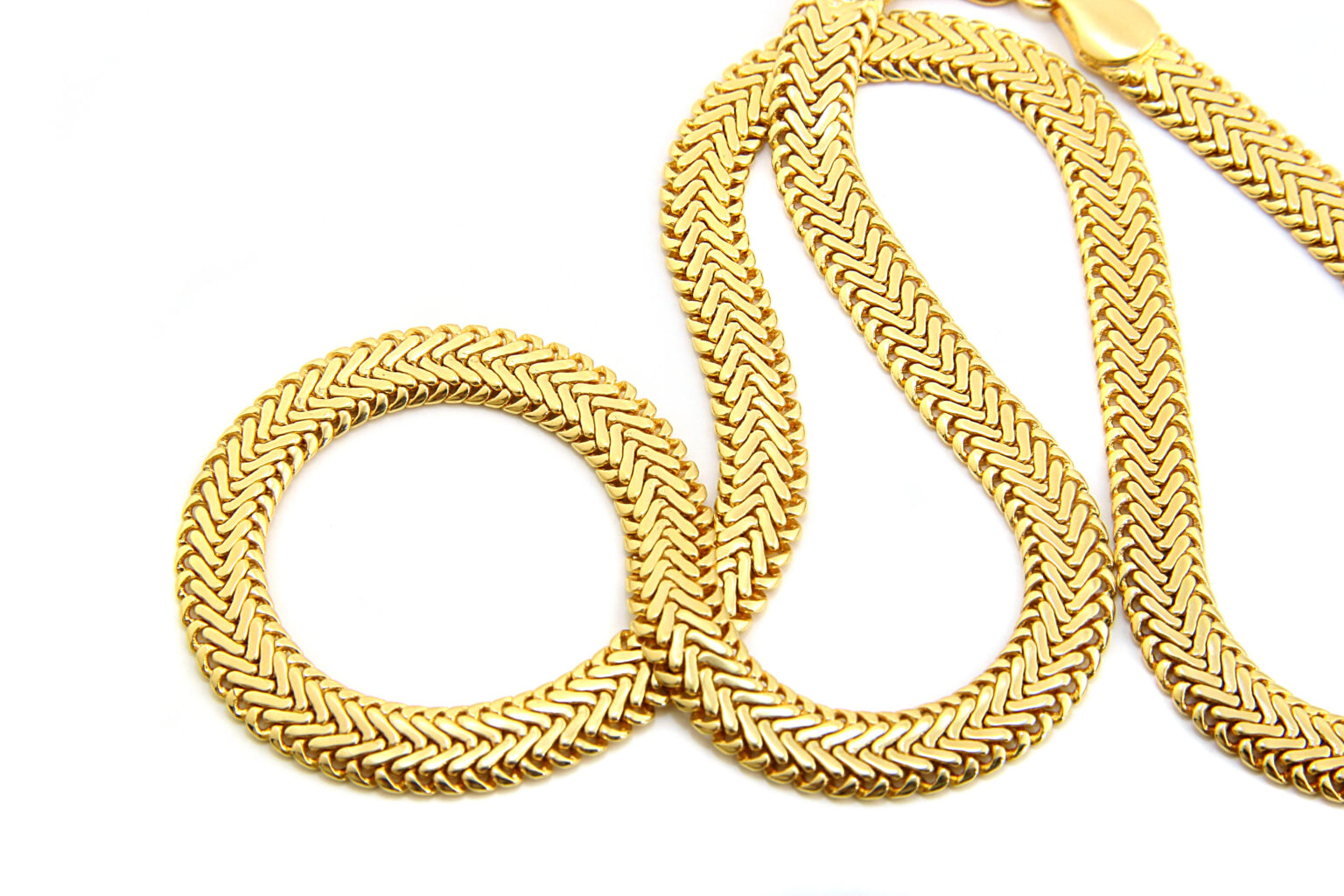
Clasps are often overlooked, but they can provide valuable insight into the age and authenticity of a piece. Common types include box clasps, bolt rings, hook clasps, and later lobster clasps, each associated with different periods.
For example, box clasps are frequently found on Victorian and Edwardian necklaces, while lobster clasps are more common in modern jewellery. These small details can be crucial when assessing a piece’s origin, helping experts determine both its age and its potential value.
Are Certain Eras More Valuable for Gold Jewellery?
Yes, certain eras are indeed more prized than others. However, while age can play a role in desirability and therefore drive the price, it is not the only factor in the value of gold jewellery. Jewellery from periods such as the Victorian era or Art Deco movement is often highly sought after due to its distinctive design and craftsmanship, for instance. However, true value depends on a combination of elements, including rarity, condition, provenance, and the quality of workmanship. This is why professional valuation is essential, as what may seem like a simple piece could hold a far greater value than expected.
What Are the Rarest Gold Jewellery Craftsmanship Techniques?
Some of the most valuable gold jewellery features rare and highly skilled techniques that are difficult to replicate today. These include:
- Filigree, which involves delicate metal threads intricately woven into lace-like patterns
- Granulation, which is tiny gold beads fused onto a surface to create texture and detail
- Hand engraving, which involves precise, decorative carving done entirely by hand
- Lost-wax casting, which is an ancient method used to create complex, one-of-a-kind forms
Pieces showcasing these techniques are often highly prized by collectors, as they reflect exceptional craftsmanship and historical significance.
Thinking of Selling Old or Rare Gold Jewellery?
Whether your gold jewellery has been passed down through generations or simply no longer suits your style, understanding its history is the first step towards unlocking its true value. We offer a personal and discreet service designed around you, and to provide a clear, honest valuation – free of charge and without obligation. Should you choose to sell, you’ll receive immediate payment with no hidden fees.
With over 25 years of experience and a trusted network of collectors worldwide, Burlingtons Ltd. is perfectly placed to achieve the best possible price for your gold jewellery. If you’re considering selling, contact us today to arrange your private valuation and discover what your pieces are truly worth.