Gold Sovereigns are among the most recognisable and widely collected gold coins in the world. Struck for over two centuries, they hold a unique place in British history, combining enduring gold value with strong collector appeal. However, one of the most important things to understand is that not all gold Sovereigns are the same.
While some of these coins are valued primarily for their bullion content, others can be worth significantly more due to rarity, finish, mint origin, or historical significance. Knowing which type of Sovereign you own is often the key to understanding its true value, especially if you are considering selling.
Below, we explore the most common types of gold Sovereigns and what makes each one unique.
Full Sovereigns vs Half Sovereigns vs Quarter Sovereigns
The first and most straightforward distinction between gold Sovereigns is their size and weight. While the design may appear similar across different versions, these coins have been issued in a range of denominations, each carrying its own gold content, appeal, and market value.
Full Sovereigns
The full Sovereign is the standard and most widely recognised version of the coin. It contains approximately 7.98 grams in total weight, with a gold content of around 7.32 grams of pure gold (22 carat). This weight has remained consistent for generations, which is why full Sovereigns are so commonly traded as both investment pieces and collector coins.
For many buyers, the full Sovereign represents the classic benchmark. Because it is the most frequently minted size, they’re also often valued close to their gold content, unless they come from rare years, special mints, or proof editions.
Half Sovereigns
The Half Sovereign is exactly what it suggests – a Sovereign struck at half the weight and size of the full coin. It weighs approximately 3.99 grams, containing around 3.66 grams of pure gold.
These coins are extremely popular, particularly among:
- Newer investors looking for a smaller entry point
- Collectors seeking specific monarchs or dates
- Buyers interested in more affordable historic gold
Despite their smaller size, Half Sovereigns can sometimes attract a surprisingly strong premium. This is because certain issues were produced in lower numbers than full Sovereigns, making them harder to find today.
Quarter Sovereigns
The Quarter Sovereign is the smallest of the commonly traded sovereign denominations, weighing approximately 1.99 grams, with a gold content of around 1.83 grams. They’re often purchased for their accessibility, particularly as:
- Gift coins
- Starter pieces for collectors
- Affordable alternatives to full bullion coins
While they contain less gold overall, collector demand can still make specific examples highly valuable, particularly in proof form or limited commemorative releases. However, because they have been minted less consistently throughout history, certain Quarter Sovereigns can be far scarcer than people expect.
Double Sovereigns
At the other end of the scale is the Double Sovereign, a larger and more impressive coin. As the name suggests, it contains twice the gold content of a full Sovereign, weighing approximately 15.98 grams, with around 14.64 grams of pure gold.
Double Sovereigns are often associated with:
- Special historic issues
- Presentation strikes
- Collector-focused releases
- Royal commemorations
Because they were never minted in the same volume as standard sovereigns, Double Sovereigns frequently carry greater rarity and collector interest, particularly for older Victorian examples or modern limited editions.
Why Size Matters When Valuing Sovereigns
Although Sovereigns are valued in part by their gold weight, the denomination alone does not always determine the final price. Fractional Sovereigns, particularly Half and Quarter issues, can sometimes command higher premiums because they may be:
- Harder to source in certain years
- More desirable to collectors
- Issued in lower mintages
- Part of proof sets or commemorative collections
This is why understanding the specific type and size of Sovereign you own is so important before selling. What appears to be a small gold coin may, in fact, be a scarce collector’s piece with far greater value than expected..
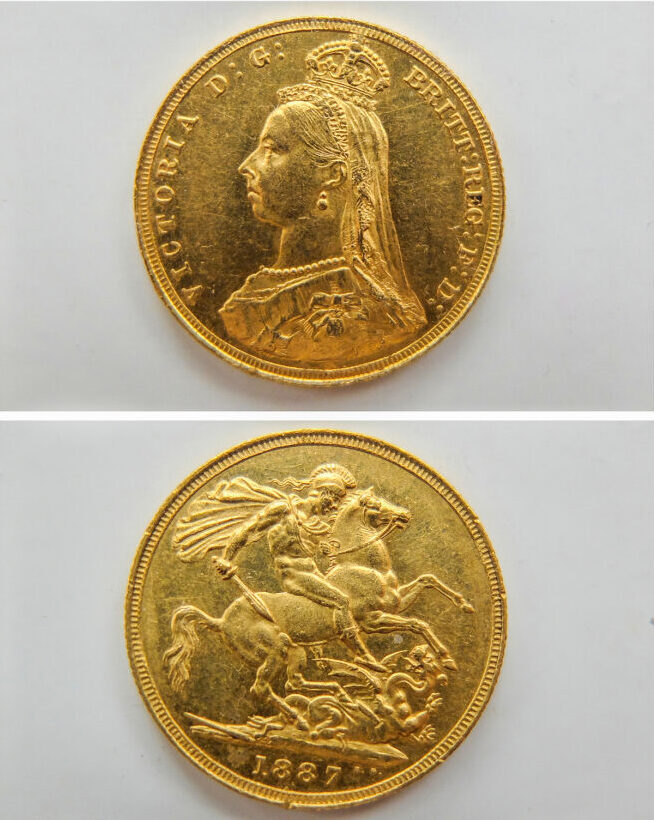
Differences Between Bullion Sovereigns and Proof Sovereigns
Another major difference in the types of Sovereign lies in how the coin was produced. Some are struck for investment purposes, while others are created as collector pieces with exceptional finish and detail.
Bullion Sovereigns
Bullion Sovereigns are the most common type. These are struck primarily for investment and are usually valued close to their gold content, with a modest premium based on market demand. They’re ideal for those purchasing Sovereigns as a traditional store of wealth, rather than as part of a curated collection.
Proof Sovereigns
Proof Sovereigns, on the other hand, are produced to a much higher standard. They are struck using polished dies, careful preparation, and superior finishes, often featuring sharper detail and a mirror-like background. They’re typically sold in presentation cases and released in much lower numbers than bullion issues.
Because of this scarcity and craftsmanship, proof coins often command significantly higher prices and are sought after by serious collectors worldwide.
What Makes Rare Sovereigns So Valuable?
The most desirable Sovereigns are not valued simply as bullion coins. Instead, they are treated as genuine historical artefacts and often sought after by collectors globally. A rare gold Sovereign may be valued at hundreds, or even thousands, above standard bullion levels, depending on the details of the coin.
These details are factors that increase rarity and desirability:
- Low mintage years (years where fewer Sovereign coins were produced)
- Colonial Mint origins
- Historical significance
- Exceptional condition or professional grading
- Unusual design variations (including striking errors)
This is why knowing what you have through an expert valuation is essential before deciding how or where to sell.
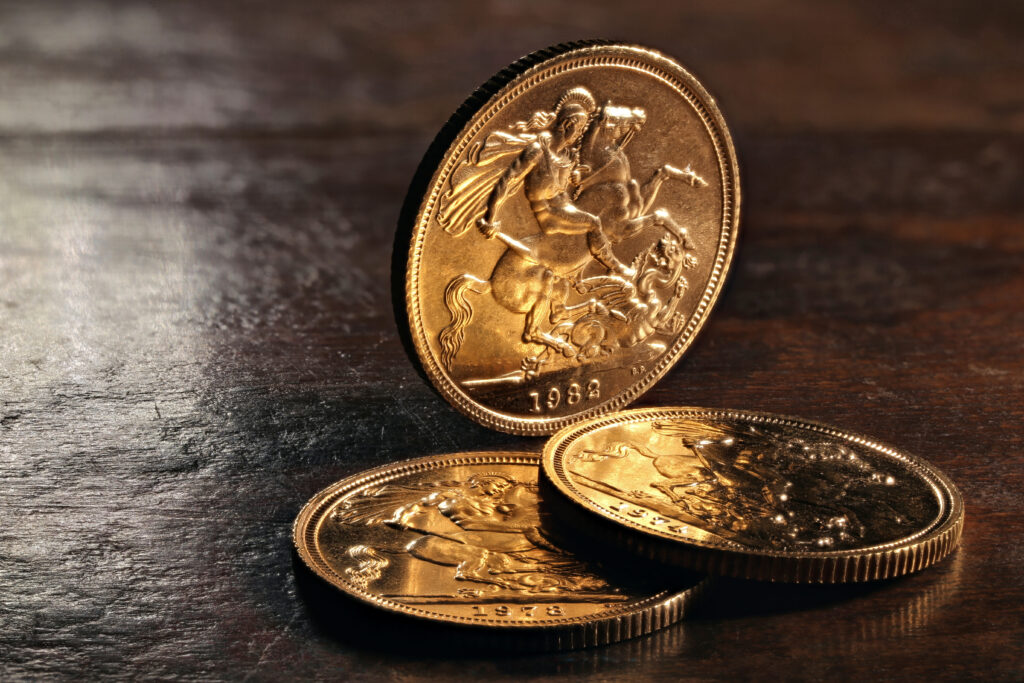
Colonial Mints and Mint Marks, Explained
Gold Sovereigns were not only minted in Britain. They were struck across the British Empire, and the location of production can play a major role in valuation.
Over the years, some of the most significant Sovereign Mints have included:
- London
- Sydney
- Melbourne
- Perth
- Ottawa
- Mumbai
- Pretoria
Many colonial coins will feature small mint marks identifying their origin. For example, a coin minted with a P will have been minted in Perth, Australia. Meanwhile, coins minted with a C will have come from Ottawa, Canada, and coins featuring the letters SA will have come from Pretoria, South Africa.
Collectors often seek out specific locations or short-lived issues. For example, Sovereigns minted in Australia or Canada during certain years can be considerably rarer than their London counterparts, making them especially appealing to international buyers. Mint marks are one of the subtle details that can change a collector’s opinion on a coin entirely.ith auction houses.
Special Edition and Commemorative Gold Sovereigns
In addition to standard circulating issues, the Royal Mint has produced a wide range of special edition and commemorative Sovereigns.
In the past, these have included:
- Jubilee releases, such as the 2022 Platinum Jubilee Sovereign, the last Sovereign coin to feature Queen Elizabeth II on the obverse
- Coronation editions, like the 2023 Coronation Sovereign, which was the first Sovereign coin of the reign of Charles III to feature his crowned portrait
- Anniversary sovereigns
- Limited collector sets
Commemorative Sovereigns are often produced in smaller quantities and may come with original packaging or certificates, which can further enhance collector value. Modern special editions are particularly popular among those building heritage collections or investing in premium sovereign issues.
Shield Back Gold Sovereigns
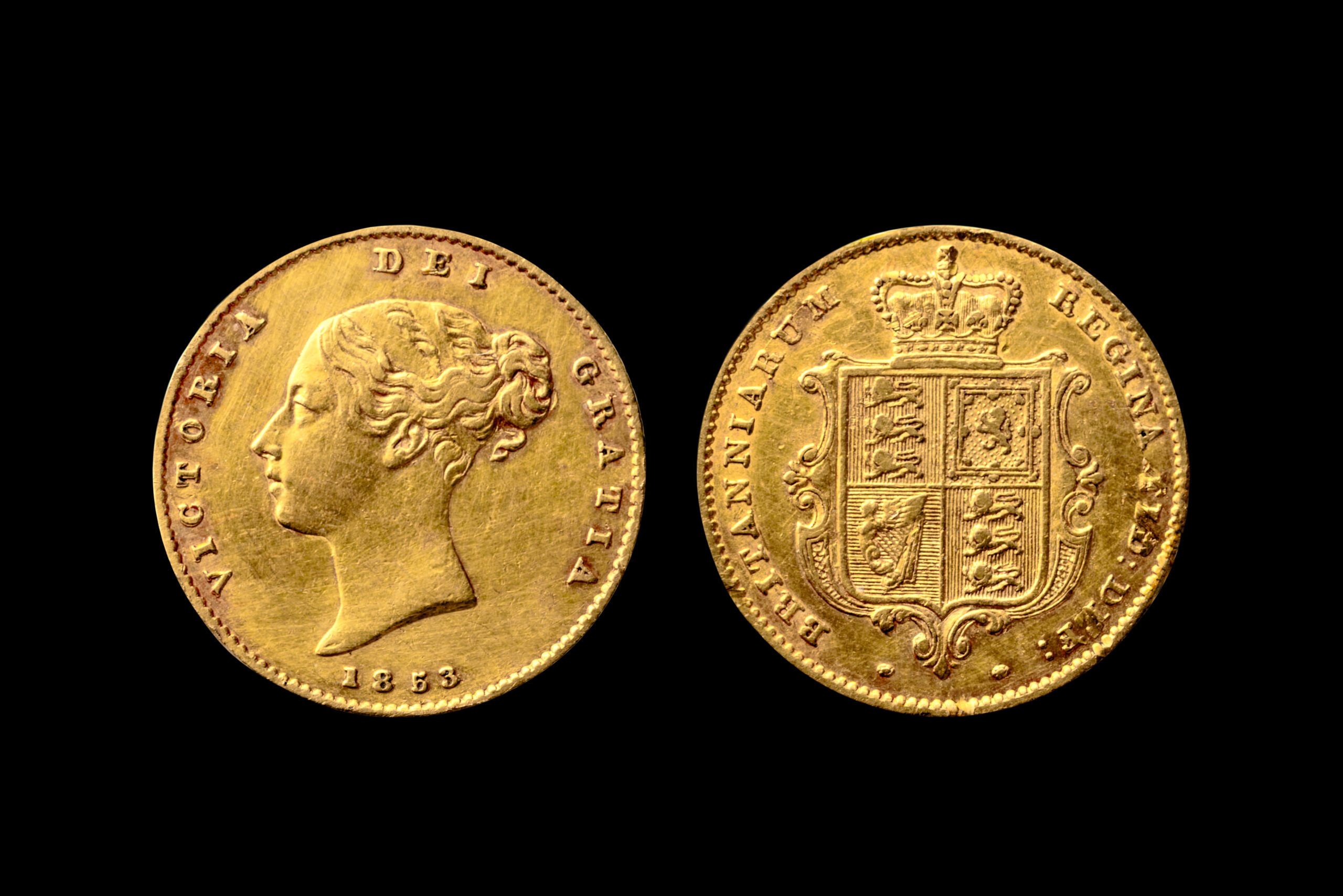
When most people think of a gold Sovereign today, they picture the classic reverse design of St George slaying the dragon, created by Benedetto Pistrucci. This has become the most recognisable image in the Sovereign series. However, before that design became the long-standing standard, many early coins, particularly during the 19th century, featured something quite different on the reverse: a heraldic shield.
This is a crowned shield bearing the Royal Arms, giving the coin a more traditional and formal appearance. The design reflects an earlier style of British coinage, linking Sovereigns even more closely to the country’s royal and imperial history. The shield back is often associated with Victorian craftsmanship and is instantly recognisable to experienced collectors.
The Collectability of Shield Back Sovereigns
For those fortunate enough to own one, a Shield Back Sovereign is often considered one of the most desirable and valuable types in the entire series, particularly when accompanied by a rare date or excellent condition. These coins connect directly to the height of the Victorian Empire and are prized for their character, craftsmanship, and historical significance.
The shield reverse was only used for a limited period, meaning production numbers are lower than the decades of St George Sovereigns that followed. They’re also among the oldest Sovereigns regularly encountered, and far fewer have survived in good condition compared to later coins.
Are You Looking to Sell Your Gold Sovereigns?
Understanding the type of Sovereign you own is essential because the difference between bullion, proof, rare mint issues, and historic varieties can be substantial. Many people discover that their coins are worth far more than expected, particularly if they include:
- Older Victorian pieces
- Proof editions
- Colonial mint marks
- Rare dates or scarce designs
At Burlingtons Ltd., we offer a discreet, personal valuation service for gold Sovereigns and other high-value coins. With over 25 years of experience and an extensive international collector network, we provide accurate assessments and offer highly competitive market prices that are often unachievable through traditional auction routes.
Have Your Gold Sovereigns Valued for Free
With us, you can expect a confidential home service and a free, no-obligation valuation that pays immediately once you’ve agreed to our offer. You’ll receive honest, expert guidance throughout, and our expert will always take time to listen to your needs and concerns. If you have gold sovereigns you’re considering selling, speaking to us is the simplest way to understand their true market value.
Contact Burlingtons Ltd. today to arrange a professional valuation and discover what your Sovereigns may be worth.