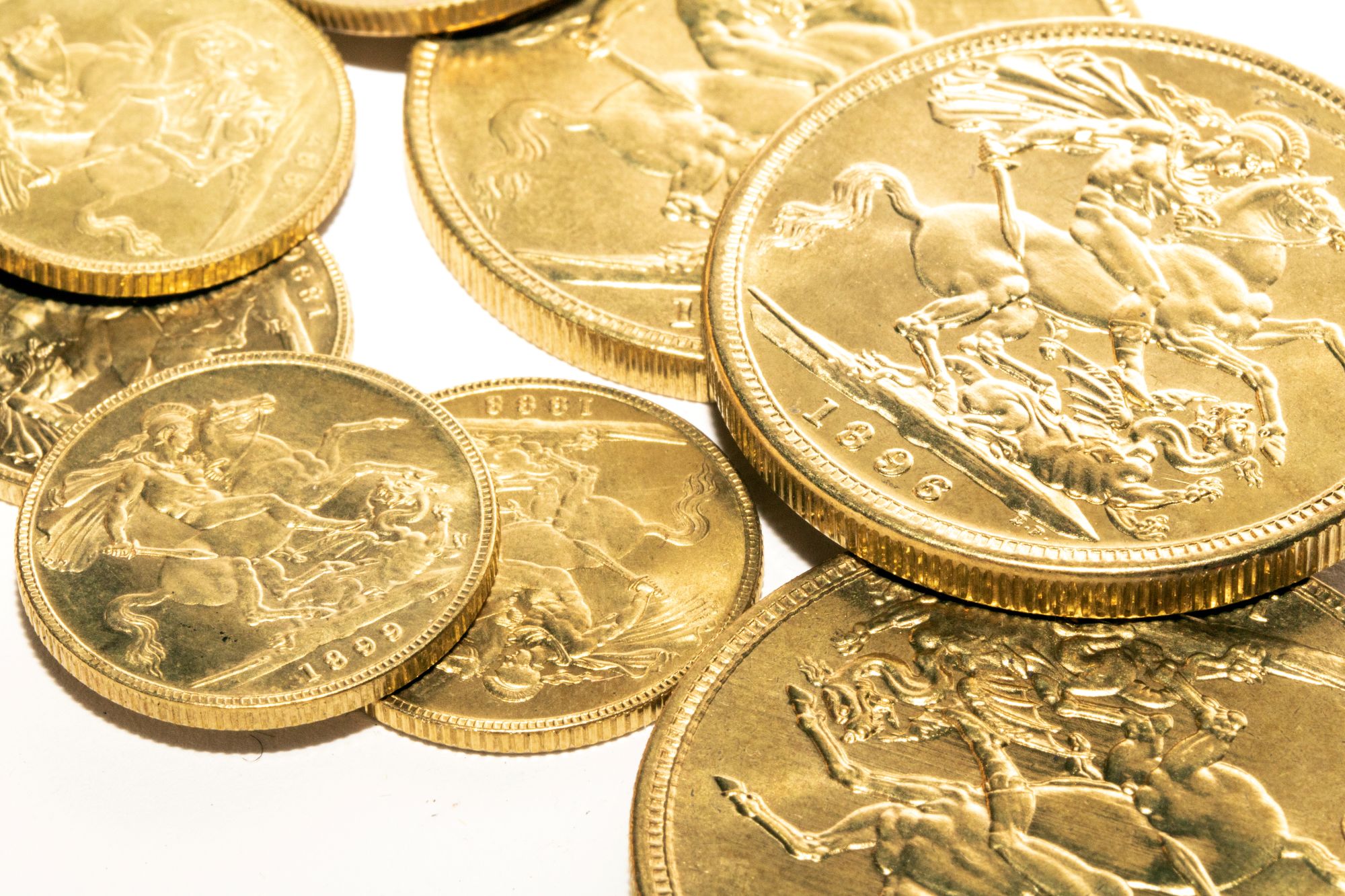
Gold coins are, as the name suggests, coins primarily made from gold. They’ve been produced by governments and mints the world over for centuries for trade, wealth storage, and national pride. Today, they mostly matter to three main groups: investors who want a portable store of value, collectors who pursue rarity and design, and historians who enjoy holding a piece of the past.
Many buyers will recognise and be able to tell the difference between common and rare historic pieces, but the appeal of gold is often the same in every coin. The metal itself offers tangible value, lasting demand, and a market that spans the world.
That’s why it sometimes helps to separate gold coins from other “gold” items people own. Gold jewellery is often valued for craftsmanship, brand, gemstones, and wearability, and it can suffer value loss if it’s damaged, missing components, or out of fashion. Gold bars are usually a pure bullion play, priced closer to the live gold market with lower premiums in many cases. Gold coins sit in between. Some are bought like bullion, where price mostly tracks the gold market, while others can carry meaningful collector value on top of the metal content.
In this guide, we’ll tell you more about everything you need to know about gold coins. But first, here are a few key terms you’ll see throughout:
- Spot Price, which is the live market price of gold per ounce (this is usually quoted in USD, but relevant worldwide).
- Premium, which is the amount above spot price paid for a coin, covering demand, minting costs, distribution, rarity, and sometimes tax considerations.
- Purity/Fineness, or how much of the coin is pure gold (e.g., 0.9999 fine gold, or 24k gold, is very pure).
- Face Value, or the legal tender value stamped on some coins. This is not the coin’s true market value.
- Grade, which is a measure of a coin’s condition, often assessed on a standard scale.
- Proof vs Bullion: these are two different types of coins that may be referred to. Proof coins are struck to a higher finish, typically for collectors; meanwhile, bullion coins are made mainly for investment, where metal content matters most. You will learn more about this below.
A Short History of Gold Coins and Minting
Gold coinage has a long timeline, from ancient civilisations using gold as a symbol of power and trade, to modern mints producing bullion coins with sophisticated anti-counterfeit technology.
Gold Coins and Minting in the UK
Celtic and Roman Gold Coins
Before Britain became Britain as we know it, gold coins in the region were often influenced by trade and contact with mainland Europe, in the form of Celtic and Roman coins. These acted not only as currency but were also effective political messaging and proof of power. They were a high-status medium, and the designs reflected alliances, cultural influence, and authority.
Early British Coinage
Early British coin history reflects shifting rulers, borders, and economic needs. Gold wasn’t always used for everyday spending. Instead, it often served as a store of wealth, a tool of statecraft, and a sign of stability. For collectors today, this period is fascinating because small differences in style, legend (inscriptions), and minting location can signal a very specific time and place.
Tudors to Victorians
This is where the story becomes especially rich for UK collectors. Over these centuries, the coins became more systematised; designs evolved, portraits changed, and denominations became more familiar. As a result, they started to resemble what people recognise today. It was also a period where artistry and symbolism became central. This is when monarch portraits, national emblems, and iconic reverse designs started to turn coins into a statement of identity.
20th Century Changes
As monetary systems modernised, gold stopped being everyday circulating money and became more of a stored asset and a collectable item. This allowed demand to increasingly shift towards two main groups of buyers. The first is the investor, who may buy modern bullion coins where pricing relates closely to the gold market, and the second is the collector, who values historic coins for their scarcity and condition.
This is one reason modern investment pieces (including many UK Royal Mint gold coins) can coexist with older, historically significant coins in the same market, though they are often priced and sold for different reasons.
Types of Gold Coins
Broadly, types of gold coins fall into two camps: modern bullion coins and historic (numismatic) coins. Modern bullion pieces are typically produced in large volumes, have clear weight and purity, and are traded mainly for their gold content and recognisability. Historic coins may still contain gold, but their market value is often shaped by rarity, history, condition, and collector demand rather than just metal weight.
That difference matters because people buy gold coins for different reasons. Investors often want consistency, an easy resale, and coins they can price quickly against the market. Collectors may focus on specific monarchs, mints, errors, low-mintage years, or coins graded by a top service. Two coins can both be “gold coins” while behaving completely differently in terms of demand, price swings, and resale options.
Popular Gold Coins in the UK
In the UK market, the most widely recognised coins tend to be Sovereigns, Half Sovereigns, and Britannias. These are familiar, easy to identify, and often easy to resell because so many buyers understand them. When people search for UK Royal Mint gold coins, they’re frequently referring to coins like the gold Britannia coin and Sovereigns that have been produced under Royal Mint authority in various eras.
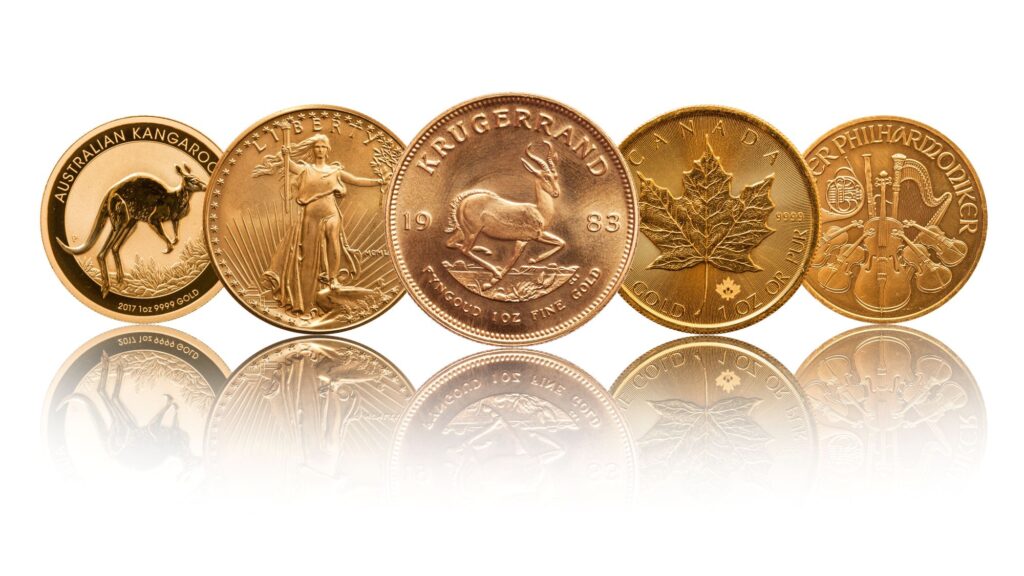
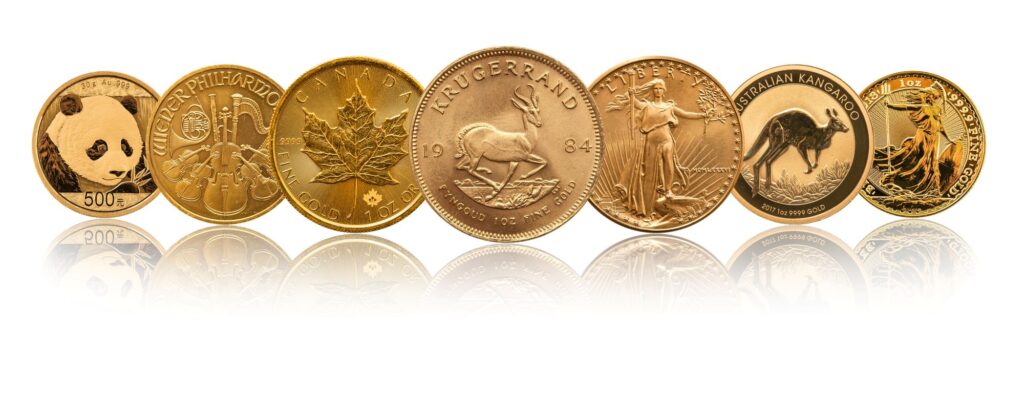
You’ll also commonly see international bullion coins circulating in the UK, especially among investors: the South African Krugerrand, the American Eagle, the Canadian Maple Leaf, and the Chinese Gold Panda all tend to be favourites. These can be highly liquid too, particularly in larger sizes like a 1 oz gold coin, where global recognition and standardised specs help keep the market active.
A Brief Look at the Gold Sovereign
The English Sovereign coin has deep historical roots, with the name reaching back centuries and becoming especially well known in the Victorian era. Modern Sovereigns (and the many Sovereigns minted across different periods) have become a cornerstone of the UK gold coin market because they are widely recognised and have a long-standing collector base.
One of the most iconic elements of this coin is the design tradition, particularly St George and the Dragon, which has become a symbol in its own right. That recognisable imagery is part of why Sovereigns remain so easy to identify and discuss, even among people who are new to selling or collecting gold coins.
Valuing Gold Coins
A gold coin’s price isn’t a single number you can apply to every coin. Instead, their value usually comes from three components. These are gold content (which is priced at market value), any numismatic (collector) premium, and its condition. The better you understand what you own, the easier it becomes to estimate where your coin sits on the spectrum between bullion and a collectable.
It’s also why two coins with the same gold weight can sell for very different prices. A common-date bullion coin in average condition may track the spot price closely. But a rare year, a sought-after variety, or a coin in exceptional grade can command a much higher premium. Even factors like original packaging (especially for proofs) can influence resale value.
Valuing Bullion Coins vs Historic Coins in the UK
Bullion coins are generally valued close to their gold content, with premiums influenced by factors like brand recognition, dealer spreads, and gold coin availability at the time you’re buying or selling. When supply is tight, premiums can rise. When supply is abundant, coins may trade closer to spot (though spreads always exist).
Historic or numismatic coins can behave differently. Here, the gold content and its market value might act like a “floor,” but rarity and collector demand can push values far higher. A historic coin’s year, mint mark, provenance, and grade can matter as much as (or sometimes even more than) the raw gold value.
Investing in Gold Coins
Investors often choose gold coins because they’re portable, widely recognised, and relatively easy to sell compared to niche collectables. Coins can be a practical way to hold gold in a form that many dealers can assess quickly, especially when you’re dealing with common bullion types and standard sizes like a one-ounce coin.
That said, investing in coins has trade-offs. Coins can carry premiums, and you’ll need to consider safe storage, insurance, and the risk of counterfeits. The key is choosing the right coins for your goal and understanding how the buying and selling prices can differ.
Are Gold Coins a Good Investment?
Generally speaking, yes, gold coins are a good investment. They’re recognisable products with strong active resale markets, they have appealing characteristics to UK investors, and the flexible sizing from fractional pieces to larger coins offers a range of options.
However, before you begin, it’s important to remember that premiums can make it harder to break even if you sell quickly. You must also take into account storage and security risks – when buying, storing, and selling, as valuable items are always at risk, and the risk of counterfeit goods is always present. This is especially true in private or informal markets.
Choosing Between Investing in Gold Coins and Gold Bars
This is one of the most common comparisons online. Bars often carry lower premiums for the same weight, making them attractive for people who want to “stack” gold efficiently. Coins, however, can be easier to trade in smaller amounts and can have broader recognition among everyday buyers.
If your goal is simple exposure to gold at scale, bars can make sense. If your goal is flexibility, recognisability, and a broad resale market, coins can be a strong option. Storage also plays a role. Bars may be compact for their value, but coins can be easier to split into smaller sales if you ever need to sell in parts.
A Short Beginner’s Guide to Investing
If you’re just getting started, you may wish to:
- Start with widely recognised coins such as Sovereigns or Britannias, or other mainstream bullion coins. This depends on your preference.
- Compare premiums over spot and be cautious of “too good to be true” deals, to avoid overpaying.
- Research the best places to buy gold coins. Established dealers and reputable channels are generally safer than informal marketplaces where authenticity is harder to confirm.
The most common mistakes to avoid are:
- Paying inflated premiums
- Ignoring spreads
- Storing coins poorly
- And buying without understanding the coin’s weight and purity.
Tips for Collecting Gold Coins
If you’re considering starting a gold coin collection, we already have advice on where to begin. Here are our top tips:
- Start with Knowledge: Learn key dates, mint marks (though some rare coins lack them), and design varieties for series you enjoy (e.g., Sovereigns).
- Condition is Key: A small jump in grade (e.g., from AU to MS-63) can drastically increase value. Top-tier condition examples are the rarest and most expensive.
- Get Coins Graded: Use reputable third-party grading services (like PCGS or NGC) for high-value pieces. They provide objective assessment, protection (encapsulation), and boost market value.
- Verify Errors: Be cautious with error coins (coins where mistakes were made during the minting process); many are fakes or simple common varieties. True errors are exceptional and often require expert authentication.
- Consider Market: Some areas (particularly in the US and UK) have large collector bases, while others are smaller but highly specialised.
- Only Buy from Trusted Sources: Purchase from reputable dealers or auction houses to ensure authenticity and fair pricing.
Or particular coins you should look for, that might fetch a higher price one day:
- Low Mintage and Survival: Coins from short reigns (such as Edward VIII), war years, or specific low-production runs (e.g., certain Sovereigns) become scarce as time passes.
- Error Coins: Genuine mistakes like off-centre strikes, double dies, or wrong planchets (a gold centre in a bimetallic coin, for instance) create instant rarity.
- Historic UK Gold: Examples include the legendary 1703 Queen Anne Vigo Five-Guinea, which was made from captured Spanish gold, and 1839 Una and the Lion £5, which are low mintage, with a unique design.
Selling Your Gold Coins
People sell gold coins for all sorts of reasons, from changing priorities and inheritance to downsizing, funding a purchase, or simply choosing to take advantage of a strong gold market. After all, it’s what it’s there for if you’ve chosen to invest. The process also doesn’t have to be daunting to navigate. Selling gold coins can actually be very straightforward when you know what you have and choose a safe, transparent route.
Selling Your Coins Safely and Comfortably
Firstly, you should do what you can to prepare coins for sale. Avoid cleaning them, and keep them in their original capsules and boxes, and with certificates where available. Storing them somewhere safe will also prevent new damage until they can be valued. Wherever you choose to store your coins, avoid humidity, heat fluctuations, and careless stacking of objects on top of and around their boxes.
A professional valuation with an expert can help you avoid underselling, especially if there’s any chance the coin has collector value beyond its gold content.
Our Conclusion About Gold Coins
Gold coins can play very different roles depending on what you own and what you want to achieve. For investors, the focus is often on recognisable bullion coins, clear weight and purity, and understanding how spot price and premiums influence the gold coin price. For collectors, rarity, grade, mint marks, and key years can matter just as much as the gold content. And for anyone inheriting or downsizing, learning the difference between bullion and collectable coins can help you make confident, informed decisions.
Find Out What Your Gold Coins are Worth
If you’re ready to take the next step and you’re considering selling gold coins in the UK, it’s worth getting a clear valuation so you understand whether you’re dealing with straightforward bullion value or something with genuine collector demand. Burlingtons Ltd. offers a discreet, no-obligation home valuation approach and can make an immediate offer when appropriate, helping you sell with clarity and confidence.
Contact us and book a date and time with our team. We’ll be glad to help you discover what you have.