Many people own gold jewellery without ever taking a closer look at the small marks stamped onto it. Yet these subtle details can reveal a great deal about a piece, including its quality, its origin, and ultimately, its value.
Understanding gold hallmarks is particularly important if you are considering selling. These marks provide reassurance of authenticity and can influence how a piece is valued in today’s market. In this guide, we explain what gold hallmarks are, how to read them, and what they mean when it comes to selling your jewellery.
What is a Gold Hallmark?
A gold hallmark is an official mark applied to a gold item to certify its purity. In the United Kingdom, hallmarking is a legal requirement for gold items above a certain weight, ensuring that what you are buying or selling is exactly what it claims to be.
These marks are applied by independent assay offices after testing the metal. For sellers, a hallmark provides immediate confidence to buyers and dealers alike, helping to establish authenticity and value without uncertainty.
The History of Hallmarks
Hallmarking in the UK dates back over 700 years, making it one of the oldest forms of consumer protection in the world. The system began in the 14th century, when the Goldsmiths’ Company in London was tasked with regulating the quality of precious metals.
At a time when trust in trade was essential, hallmarks ensured that gold and silver items met strict standards. Over time, this system evolved into the structured and highly respected hallmarking process we recognise today.
This long-standing tradition is one of the reasons why UK hallmarks are so widely trusted across the global market.
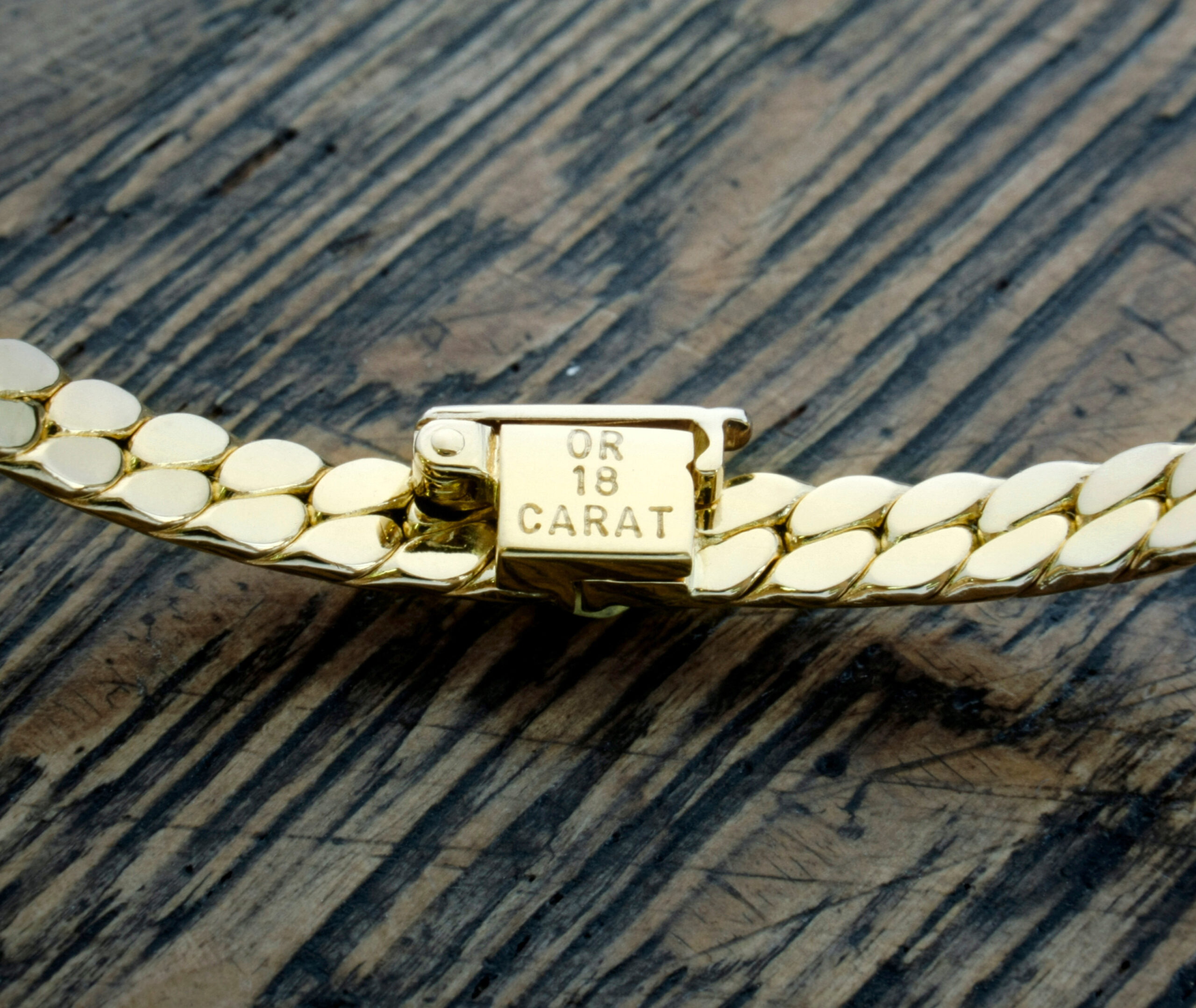
What Does a Hallmark Tell You?
A UK hallmark is made up of several individual marks, each offering a piece of information about the jewellery:
- The most important is the purity mark, or millesimal fineness mark, which indicates how much gold is present in the piece. For example, 375 represents 9ct gold, while 750 represents 18ct gold.
- You will also typically find an assay office mark, showing where the item was tested. Each office has its own symbol.
- In addition, there is often a maker’s mark, or sponsor’s mark, identifying the original manufacturer or sponsor of the piece. Some items also include a date letter, which can indicate the year the piece was hallmarked.
The Most Common Gold Hallmarks in the UK
In the UK, gold purity is most commonly expressed using numerical marks:
- 375 – 9ct gold (37.5% pure gold)
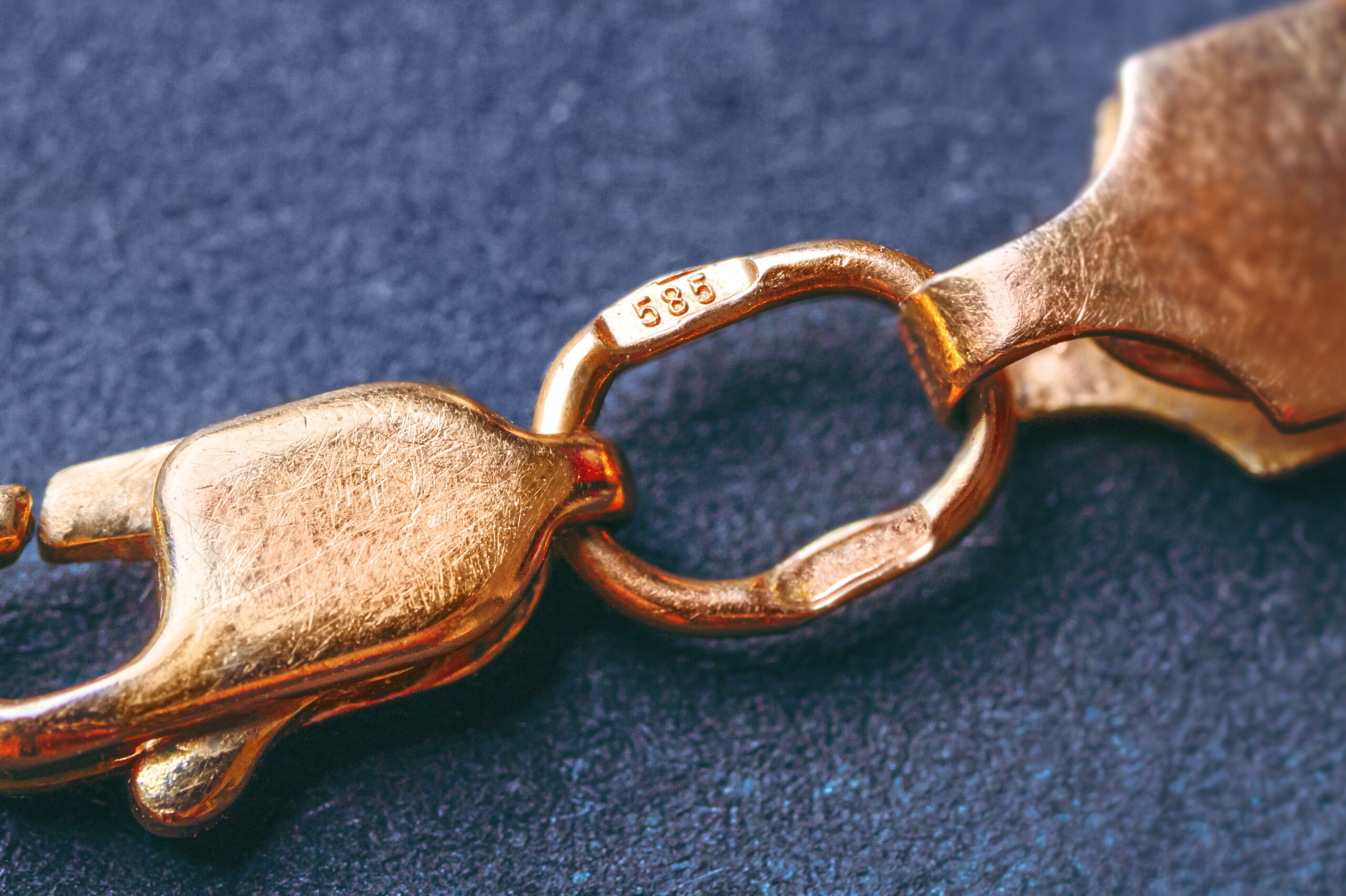
- 585 – 14ct gold (58.5% pure gold)
- 750 – 18ct gold (75% pure gold)
- 916 – 22ct gold (91.67% pure gold, the same amount as a full Sovereign coin)
These numbers are widely recognised and play an important role in valuation. Higher gold content typically results in higher intrinsic value, although other factors such as craftsmanship, age, and design can also influence price.
Assay office symbols further confirm authenticity, with London, Birmingham, Sheffield, and Edinburgh each using distinctive marks:
- London’s symbol is a leopard’s head
- Birmingham’s symbol is an anchor
- Sheffield’s symbol is a Tudor Rose
- Edinburgh’s symbol is a three-towered castle
Does Every Piece of Gold Jewellery Have to Have a Hallmark?
Not every piece of gold jewellery will carry a hallmark. In the UK, hallmarking is required only for items above a certain weight threshold. There are also several exceptions. For instance, antique pieces may predate modern hallmarking laws, while very small or delicate items may fall below the required weight. Jewellery purchased abroad may also follow a completely different hallmarking system.
For this reason, the absence of a hallmark does not automatically mean a piece is not genuine gold.
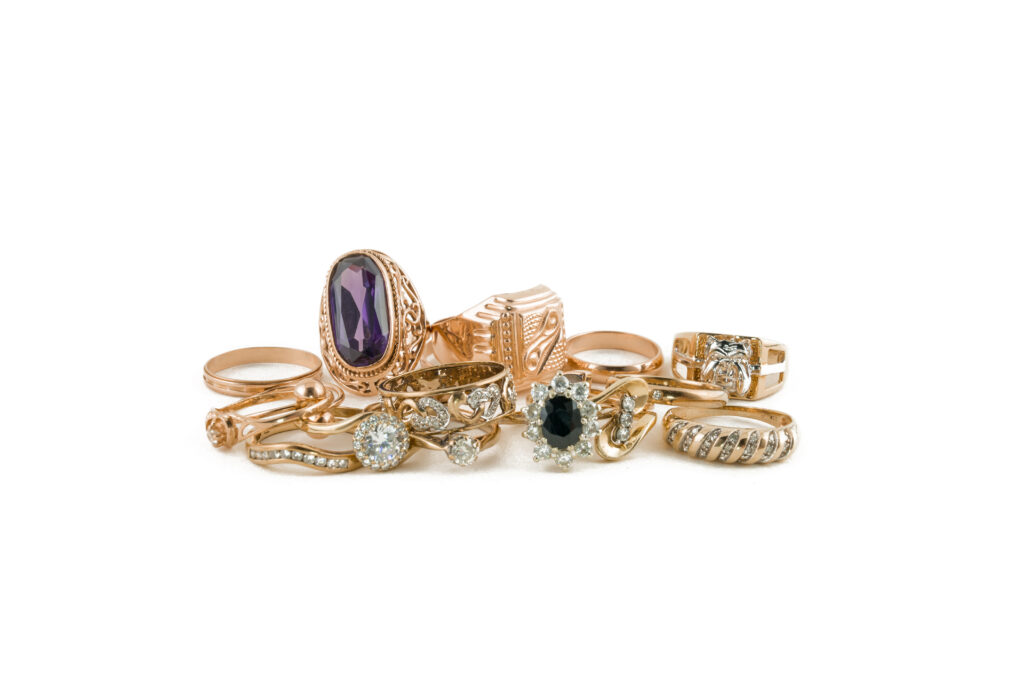
What Happens if Gold Jewellery Doesn’t Have a Hallmark?
If a piece of gold jewellery does not have a hallmark, further assessment is needed to confirm its composition and value. Professional buyers, such as Burlingtons Ltd., use a combination of experience and testing methods to evaluate unmarked items accurately. In many cases, these pieces can still hold significant value, particularly if they are antique or handmade.
This is where expert knowledge becomes essential. A trained eye can often recognise quality and authenticity beyond what is visible on the surface.
How Hallmarks are Used Around the World
While the UK uses a well-structured hallmarking system, other countries follow different conventions:
- Across Europe, numerical purity marks such as 750 or 585 are commonly used, alongside assay office marks from individual countries – for example, an eagle’s head denotes a French piece.
- Russian gold assay marks differ depending on the period; Imperial era pieces (1899–1917) may feature the head of a woman with a Kokoshnik tiara, while Soviet era items feature a Star with Hammer and Sickle.
- Russian gold assay marks differ depending on the period; Imperial era pieces (1899–1917) may feature the head of a woman with a Kokoshnik tiara, while Soviet era items feature a Star with Hammer and Sickle.
- There are no ascribed assay marks for gold in North America. Instead, a piece of jewellery will be self-certified with quality marks (e.g. “18K”) from the manufacturer and appear with a registered trademark.
- Official assay marks – typically British ones – may appear on antique items.
- Official assay marks – typically British ones – may appear on antique items.
- Assay office marks on South American gold items often differ from the strict, codified hallmarking systems found in Europe. Instead, alongside their purity marks, these pieces may feature initials of the goldsmith or manufacturer inside a shape, rather than a centralised assay office logo.
- Older or more official pieces might bear national crests or regional assay stamps, though these are less standardised than European hallmarking.
- Indian gold hallmarks are officially issued by the Bureau of Indian Standards (BIS) to certify purity. As of April 1, 2023, the BIS hallmark includes four components: the BIS logo, a 6-digit alphanumeric HUID code, the purity mark, and the specific Assay Centre’s identification mark.
- Most African countries will use specific, legislated marks to guarantee metal purity (e.g., 925, 750, 585), and may also use sponsor marks or letters to identify the country of origin, such as “ZA” denoting South Africa. However, not everywhere will always use an assay mark.
- Egypt is unique in this for this continent, as it has been mandatory since 1916 for gold from there to have a three-part sequential hallmark stamp.
- Egypt is unique in this for this continent, as it has been mandatory since 1916 for gold from there to have a three-part sequential hallmark stamp.
- Higher purity gold, such as 22ct or 24ct and that’s seen in the Middle East and certain parts of Asia, is more prevalent, and this may be marked differently or not at all.
Understanding these variations is important, particularly if your jewellery has been purchased or inherited from overseas.
Why Hallmarks Matter When Selling Gold Jewellery
When it comes to selling gold jewellery, hallmarks play a key role in establishing trust and value. They provide immediate reassurance to buyers and can simplify the valuation process.
However, hallmarks are only part of the picture. Factors such as craftsmanship, historical significance, and market demand can all influence what a piece is truly worth. This is why a professional valuation is so important. An experienced specialist can interpret these details and ensure you receive an accurate and fair assessment.
Thinking of Selling Your Gold Jewellery?
If you are unsure what your gold jewellery is worth, or if you have pieces with hallmarks you don’t recognise, we offer a simple and discreet solution. Our personalised home valuation service allows your items to be assessed in complete privacy. With over 25 years of experience and a global network of collectors, we offer accurate valuations and immediate payment, without the fees or delays associated with auction houses.
Whether you are selling a single piece or an entire collection, Burlingtons Ltd. ensures a straightforward, respectful, and rewarding experience. Contact us today to arrange a free, no-obligation valuation and discover the true value of your gold jewellery.